
 WhatsApp
Selecting the right gold washing plant for alluvial (placer) gold recovery is one of the most crucial capital decisions an operator will make. Unlike hard-rock deposits that demand heavy primary crushing and chemical leaching, alluvial deposits contain free-milling gold mixed with gravel, sand, boulders, and clay. However, no two alluvial deposits are identical—a plant optimized for clean river gravels will quickly clog or lose fine gold if fed with sticky, high-clay sticky ore.
To avoid costly missteps and maximize recovery rates across all gold particle sizes, operators must evaluate key physical deposit characteristics, mechanical washing mechanisms, recovery circuits, and operational requirements. This guide breaks down the step-by-step framework to choose the ideal gold washing plant for your site.
1. Analyze Deposit Geology and Ore Profile
Before requesting equipment quotes, perform thorough sampling to determine three fundamental characteristics of your raw material:
- Clay and Mud Content: High-clay ores (such as laterites or sticky muds) hold onto gold tightly. If clay balls pass through unwashed, they act as "gold sponges," trapping fine particles and washing them directly into tailings.
- Oversize Material Ratio: Determine the percentage of rocks larger than 100 mm to 150 mm. High proportions of large boulders require heavy-duty hopper grizzlies and robust feed hoppers.
- Gold Particle Size Distribution: Coarse gold nuggets (>1 mm) behave differently in slurry than fine, flour gold (<74 microns / -200 mesh). Knowing your size distribution dictates the design of your gravity recovery circuit.
2. Select the Primary Washing Technology: Trommel vs. Rotary Scrubber
The primary washing stage liberates gold from surrounding dirt and rock. Choosing between a trommel screen and a rotary scrubber is the most critical technical choice you will make:
| Selection Criteria | Gold Trommel Screen | Rotary Scrubber |
|---|---|---|
| Best Suitable Ore | Clean river sand, loose gravel, low-clay placer deposits | Sticky clay, compacted laterite, mud-heavy deposits |
| Washing Action | Screen drum rotation with internal high-pressure water spray bars | Solid un-screened washing cylinder with heavy internal lifters and tumbling action |
| Power & Operating Cost | Lower power consumption, lighter structure, lower CAPEX | Higher torque requirements, heavier build, slightly higher CAPEX |
| Clay Dissolution Rate | Moderate; struggles to break down hard clay lumps | Exceptional; completely slurries tough clay into fine wash-water |
3. Design a Multi-Stage Gravity Recovery Circuit
Washing and screening only prepare the material. Capturing the gold requires matching your gravity recovery unit to the gold size distribution:
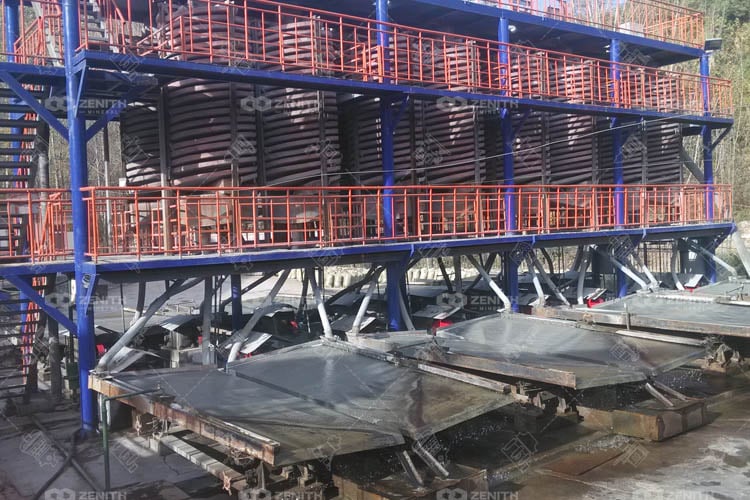
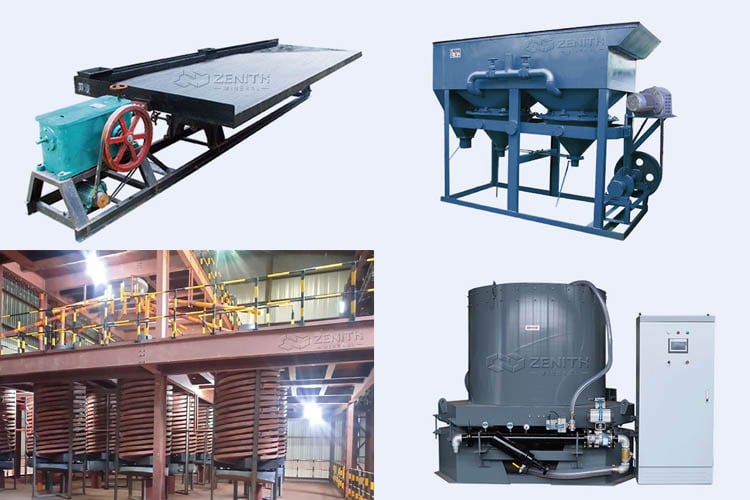
- For Ultra-Fine Gold (-200 mesh): Centrifugal Gold Concentrators. Standard sluice mats miss fine flour gold because water velocity floats light particles away. High-g centrifugal concentrators (60G–100G) force fine gold out of suspension, capturing up to 95%+ of fine gold.
- For Medium-to-Coarse Gold: Pulsating Sluice Boxes & Jigs. Hydraulic/pulsating sluice boxes prevent bed compaction and handle high volume fluctuations without clogging, making them superior to static riffle sluices.
- For Final Concentrate Dressing: Shaking Tables. High-precision shaking tables separate heavy black sand (magnetite/ilmenite) from free gold, producing a clean concentrate ready for direct smelting into dore bars.
4. Match Plant Mobility to Your Operational Strategy
How often you need to relocate your washing plant determines whether you should invest in stationary, modular, or mobile configurations:
- Wheel-Mounted Mobile Washing Plants: Ideal for riverbed or paleochannel deposits where the mining face advances rapidly. Towable by heavy trucks, these units eliminate costly concrete pad construction and shorten excavator haulage distances.
- Tracked Mobile Washing Plants: Best for soft, swampy, or extremely rough terrain. Wireless remote-controlled crawler tracks allow the plant to move alongside excavators within minutes.
- Modular Skid-Mounted Plants: Highly cost-effective for medium-to-long-term mining sites. Easy to assemble, dismount, and transport in standard shipping containers.
5. Calculate Water and Utilities Requirements
Alluvial gold washing is water-intensive, requiring 2.5 to 5 cubic meters of water per ton of raw material processed. When choosing a plant, ensure your site setup includes:
- Water Pump Capacity: Adequate water volume and pressure (3–5 bar) at the spray bars to wash gravel clean.
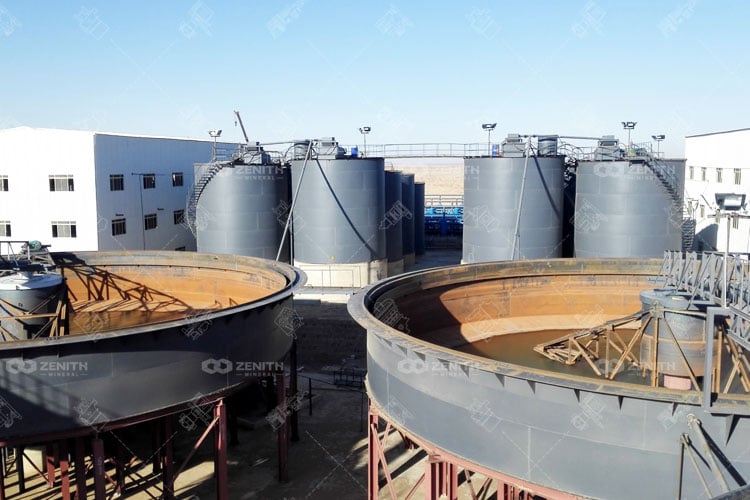
- Closed-Loop Tailings Ponds: Multi-stage settling ponds to clarify and recycle process water, reducing raw water intake and meeting environmental discharge regulations.
- Power Genset Matching: Ensure your diesel generator set is rated for heavy continuous duty with sufficient margin for high-torque motor starting loads.
Summary Checklist for Buyer Decision-Making
- ✔ Low clay + fine gold? → Gold Trommel + Centrifugal Concentrator
- ✔ High clay + mixed gold? → Rotary Scrubber + Centrifuge + Pulsating Sluice
- ✔ Rapidly advancing mining face? → Wheel-Mounted or Tracked Mobile Washing Plant
- ✔ Remote location with strict transport limits? → Modular Containerized / Skid-Mounted Plant
Need Professional Guidance for Your Gold Washing Project?
Whether you are processing clean gravels with a compact Portable Gold Trommel or tackling sticky laterite mud with a heavy-duty Rotary Clay Scrubber, SBM's technical engineering team is ready to design your optimal flowsheet.
Contact our specialists today to get a free, custom-designed flowsheet, equipment configuration advice, and an itemized factory-direct quote tailored to your deposit specs and capacity targets.



 24/7 Online