In the overall design and investment of copper mineral processing projects, the crushing circuit acts as a critical upstream stage that directly determines the efficiency and operational stability of downstream grinding and flotation processes. Unlike conventional construction stone, copper ore has complex material properties, including oxidized ore and sulfide ore types, widely associated with hard quartz gangue, while some ore bodies contain sticky clay. Due to these combined complex characteristics, standard crushing configurations for aggregate and soft rock projects are not applicable to copper ore processing. Following real on-site selection and decision-making procedures, this article provides a fully practical and reusable equipment selection guide for copper project investors.
Get the Copper Ore Crushing Solution
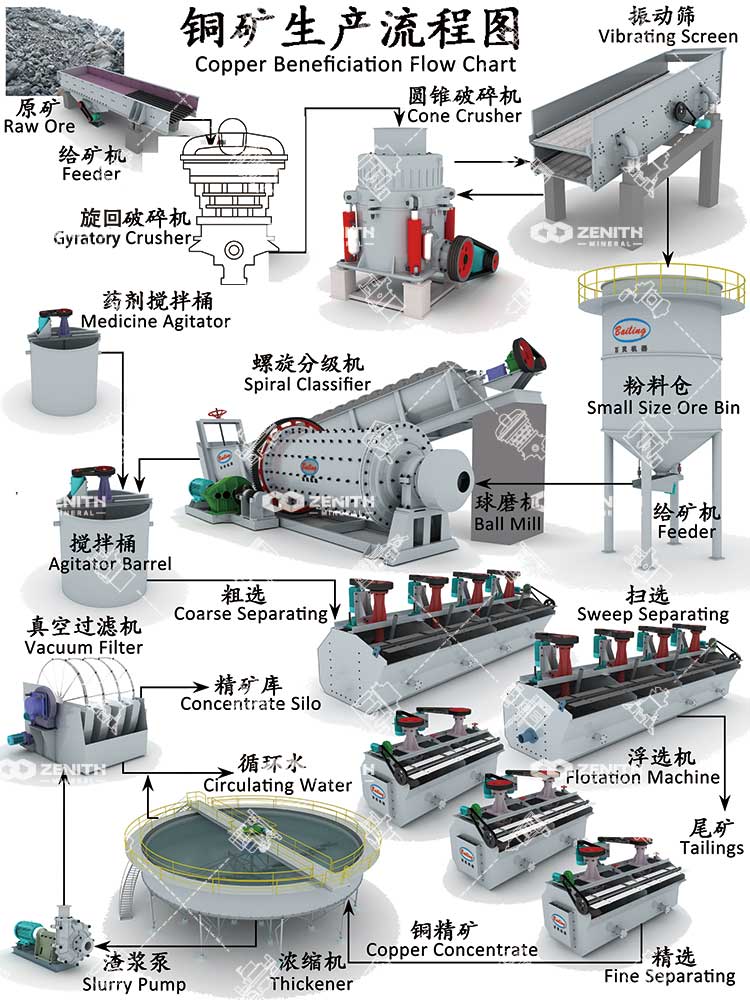
Copper ore is mainly divided into two major categories by mineral composition: sulfide copper ore (chalcopyrite, bornite, chalcocite, etc.) and oxide copper ore (malachite, azurite, cuprite, etc.). This classification directly determines the downstream beneficiation route: sulfide ore generally follows the flotation route (crushing → grinding → flotation → concentrate), while oxide ore follows the heap leaching route (crushing → agglomeration → heap leaching → solvent extraction electrowinning).
Why does copper ore classification affect crushing equipment selection? Because the two ore types have different requirements for crushing products. Flotation's crushing product is mill feed, targeting uniform particle size distribution and controllable maximum particle size; heap leaching's crushing product goes directly onto the heap, requiring a balance of fines proportion. Different targets mean differences in crushing stages, closed-circuit configuration, and more.
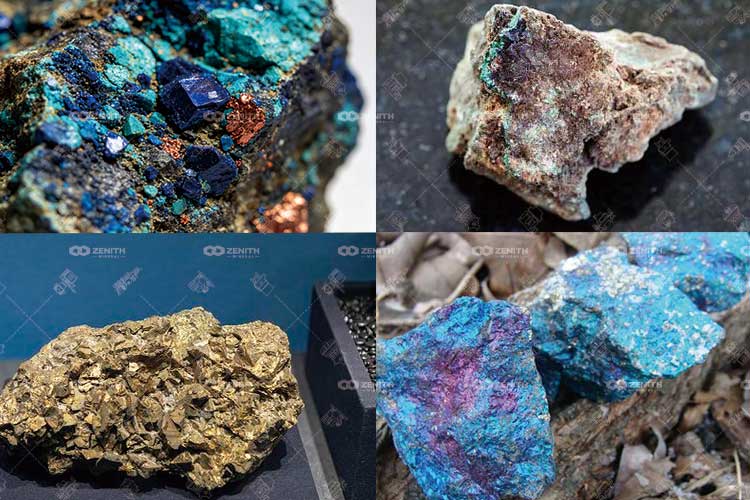
The physical properties affecting copper ore crushing equipment selection mainly include:
| Property | Impact on Selection |
| Hardness | Determines the crushing force and power requirements the equipment must withstand; for medium-hard and above ore, cone crushers are preferred for secondary/tertiary crushing |
| Abrasiveness | Copper ore is commonly associated with hard gangue such as quartz; high abrasiveness directly affects liner and wear part life |
| Clay content | Copper ore oxidation zones and secondary enrichment zones often contain clay; clay clogs crushing chambers and screen apertures, a common practical challenge in copper ore crushing |
| Moisture content | Tropical rainy-season mining areas have high ore moisture, aggravating clay issues and affecting crushing and screening efficiency |
Processing scale determines equipment specifications and crushing stages. For small to medium-scale copper projects, two-stage crushing is generally sufficient; for large-scale copper projects processing tens of thousands of tons per day, three-stage closed-circuit is often required, and large-specification equipment must be considered.
Crushing product specifications are determined by the downstream process. Only after product specifications are determined can the total reduction ratio be established, thereby designing each crushing stage.
Primary crushing is the first operation of the entire crushing line. Its task is to crush blasted run-of-mine ore to a size suitable for secondary crushing equipment feed in a single pass, establishing the raw material quality foundation for subsequent grinding and beneficiation. The selection of copper ore primary crushing equipment depends on one fundamental premise: how large is your mine.
According to the USGS porphyry copper deposit model report (Scientific Investigations Report 2010-5070), porphyry copper deposits supply approximately 60% of global copper production and about 65% of copper resources. The typical characteristics of such deposits are: large reserve scale, long mining life, and high daily throughput.
Once scale increases, the gyratory crusher becomes the only reasonable choice for copper ore primary crushing.
The primary crushing stage of large copper mines generally has a processing capacity above 2,000 t/h, with some super-large mines exceeding 8,000 t/h from a single gyratory unit. At this scale, the advantages of gyratory crushers are clear:
The ZENITH HGT series gyratory crusher is designed for large-scale primary crushing projects, suited to large copper mine projects.
Core parameters:
ZENITH HGT match points in copper ore primary crushing conditions:
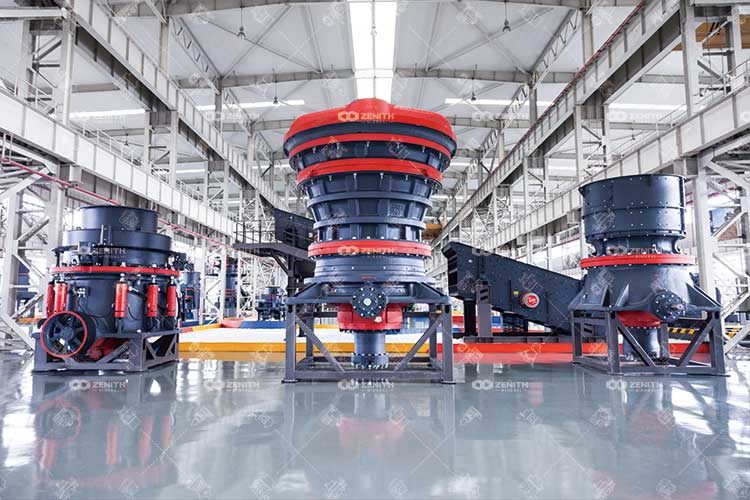
Gyratory crushers are the mainstream choice for large copper mines, but not all copper projects meet the conditions for gyratory installation. In small to medium-scale copper projects, jaw crushers remain the conventional solution for the primary crushing stage.
Typical scenarios for choosing jaw crushers over gyratory crushers:
ZENITH C6X jaw crusher covers small to medium copper mine primary crushing needs:
Core parameters:
Equipment performance:
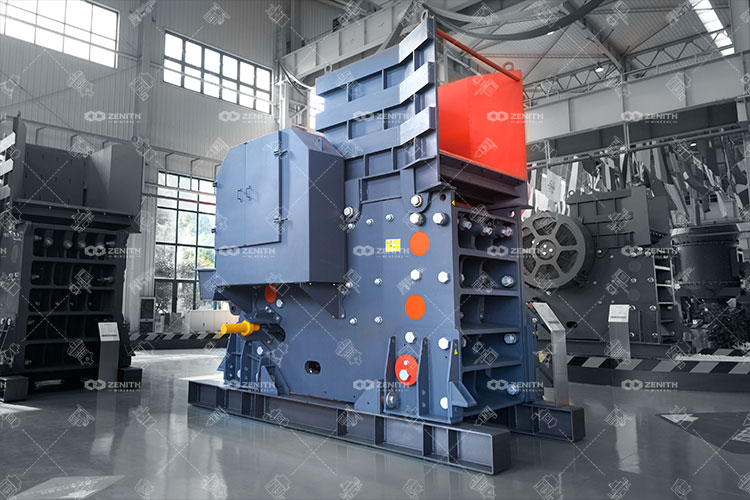
The mainstream solution for copper ore primary crushing is the gyratory crusher, which is widely used in large and super-large mining projects with daily processing of tens of thousands of tons. For the vast majority of small to medium-scale copper projects, jaw crushers offer better overall performance in investment, maintenance, and adaptability.
| Evaluation Dimension | Gyratory Crusher (HGT) | Jaw Crusher (C6X) |
| Processing capacity | >2,000 TPH | <1,500 TPH |
| Mine type | Large, super-large copper mines | Small to medium copper mines |
| Mine life | Long-term | Medium to short-term |
| Initial investment | Sufficient, targeting long-term operation | Limited, targeting rapid commissioning |
| Ore clay content | Low | High |
| Installation method | Fixed, semi-mobile | Fixed, mobile |
Cone crushers employ the inter-particle compression crushing principle. Material is compressed and crushed within the crushing chamber, with particles compressing and grinding against each other, achieving a "rock-on-rock" crushing effect.
Impact crushers rely on blow bars striking material at high speed — the essence is impact energy at work. The advantages are good product shape and high reduction ratio. However, in actual production, wear part consumption is proportional to ore hardness and abrasiveness.
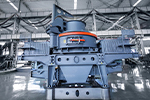
Most copper ore has relatively high hardness and high abrasiveness. Impact crusher blow bars and liners wear quickly under such conditions, with high replacement frequency and increased downtime. Therefore, from a total cost perspective, cone crushers are recommended for copper ore secondary/tertiary crushing.
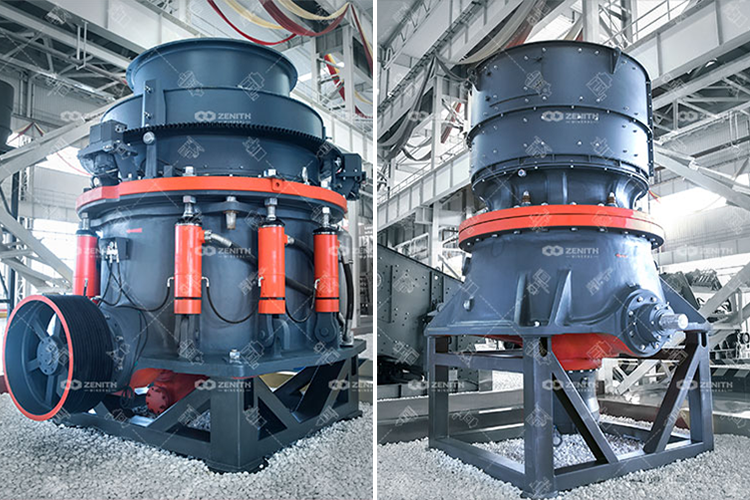
4.1 ZENITH HPT Cone Crusher
Core parameters:
HPT match points in copper ore conditions:
4.2 ZENITH HST Cone Crusher
Core parameters:
HST match points in copper ore conditions:
HPT or HST for copper ore secondary/tertiary crushing? Choose HPT for high capacity and strict particle size requirements; choose HST for medium scale, flexible conditions, and simple maintenance. The two can also be used in combination on the same crushing line: HST for secondary crushing and HPT for tertiary crushing, a configuration commonly seen in large copper projects.
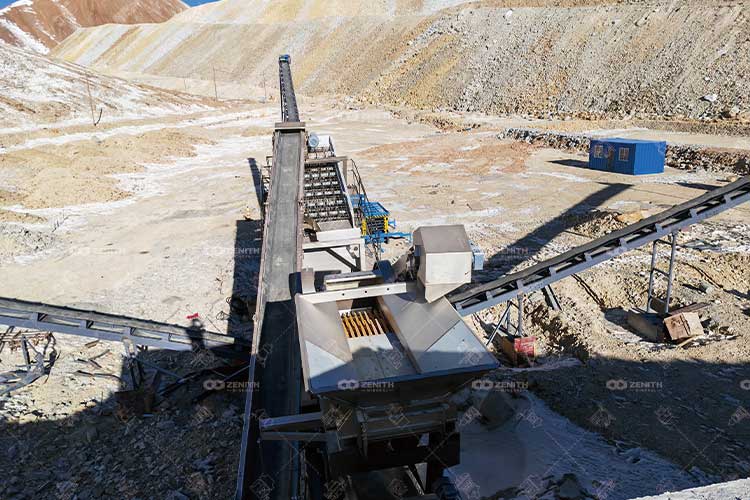
The number of crushing stages is determined by the total crushing ratio. For copper ore, a single crushing stage cannot deliver a sufficient reduction ratio or consistently produce particle sizes that meet grinding feed requirements. For this reason, copper ore processing lines require a multi‑stage crushing configuration tailored to ore properties and production targets.
| Project Scale | Typical Configuration | Characteristics |
| Small | Jaw primary + cone secondary | Low investment |
| Medium | Jaw primary + cone secondary + closed-circuit screening | Ensures uniform mill feed size |
| Large, super-large | Gyratory primary + cone secondary + cone tertiary + closed-circuit screening | Three-stage closed circuit, precise size control |
In addition to the matching degree between ore characteristics and equipment parameters, other factors that may be encountered in actual production should also be considered, with comprehensive evaluation and selection.
Copper projects are mostly located in remote areas with long parts logistics lead times. The supply lead time for wear parts such as liners and screens directly affects production line stability and production efficiency.
High-altitude mining areas, rainforest climate mining areas, arid mining areas, and other regions with special climatic conditions all affect equipment operating status to a certain degree, and should be factored in during the selection stage.
Ore from the same mine is affected by mining depth — ore hardness, abrasiveness, and other properties will change. The full-lifecycle ore variation trend should be assessed in conjunction with geological exploration reports during equipment selection.
Copper ore beneficiation projects generally operate over long periods, and crushing equipment use spans the entire production cycle, requiring continuous technical support. The supplier's service response speed and technical strength are factors that cannot be ignored during equipment selection.
The selection of copper ore beneficiation crushing equipment is essentially a decision-making process that uses systems thinking to match ore characteristics, processing scale, and downstream process requirements.
Selecting the right equipment is only half the job — the other half is whether the supplier can provide continuous technical support after equipment delivery. ZENITH has been deeply engaged in the metal ore crushing field for many years. Its flagship crushing products — HGT gyratory crusher, C6X jaw crusher, HPT cone crusher, HST cone crusher, and more — are widely used in large metal ore projects. In terms of service, ZENITH provides full-lifecycle technical support from plant design, equipment supply, installation guidance, commissioning, to operation and maintenance optimization, with equipment delivery records covering more than 180 countries and regions worldwide.
The true guarantee for long-term stable operation of copper ore projects depends on a partner who can accompany you through the entire lifecycle. For cooperation inquiries, please contact ZENITH.
Click Here to Get Copper Ore Crushing Solution
Copper ore hardness is typically high and commonly associated with abrasive gangue such as quartz. Impact crusher blow bars wear quickly under such conditions, resulting in poor operating economics. Therefore, the common industry practice is: cone crushers are preferred for copper ore secondary/tertiary crushing. Impact crushers are better suited for low-hardness, low-abrasiveness materials such as limestone.
For super-large copper mines with daily processing of tens of thousands of tons and above, gyratory crushers should be considered — their advantages of continuous crushing and high capacity can be fully leveraged in large copper projects. But for the small to medium-scale copper projects, jaw crushers offer better overall performance in investment and maintenance convenience, making them the conventional choice.
It depends on the total reduction ratio. For small to medium projects, two stages (jaw + cone) suffice; for large and super-large projects, three stages (gyratory + cone secondary + cone tertiary) are typical, with closed-circuit screening if necessary to ensure product size.
Recommended copper ore crushing line configurations:
Large, super-large copper mines: Primary — ZENITH HGT gyratory crusher; Secondary/tertiary — ZENITH HPT/HST cone crushers.
Small to medium copper mines: Primary — ZENITH C6X jaw crusher; Secondary/tertiary — ZENITH HPT cone crusher or HST cone crusher.
(For specific equipment parameters, please visit the ZENITH official website product pages: http://www.zenithcrusher.com)


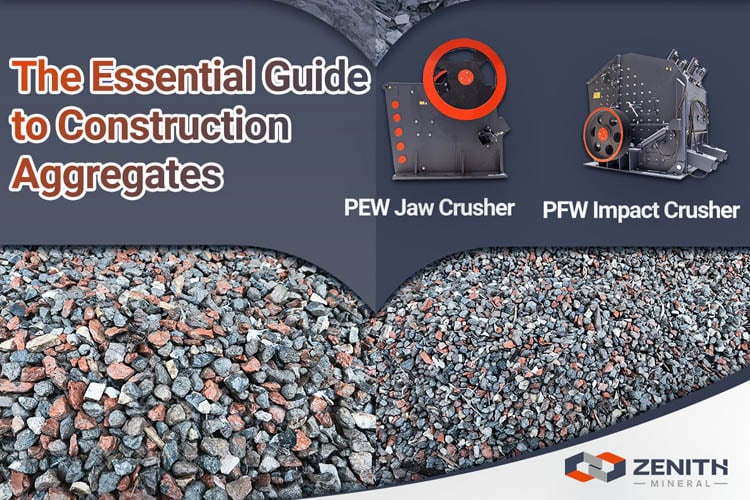
This guide explores construction aggregates types, uses, production, and key properties, offering a comprehensive look at this fundamental building block.
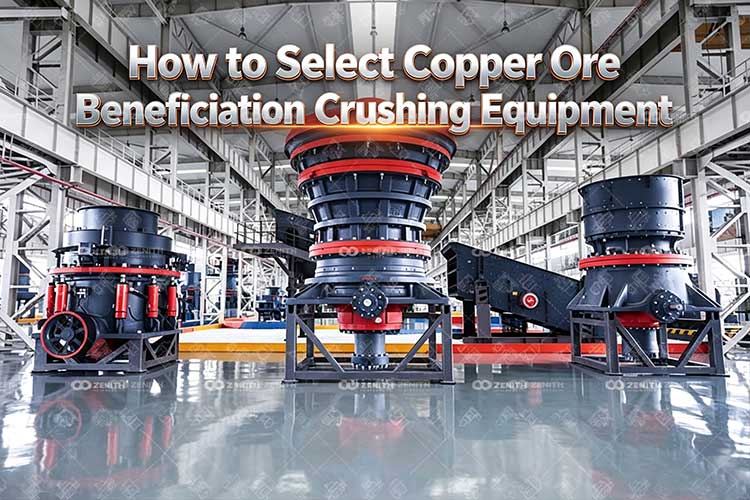
When selecting crushing equipment for copper ore processing, the biggest challenge is not parameter matching, but systematic configuration based on ore characteristics, process flow, and production scale. This article presents a practical copper crushing equipment selection framework, helping mine investors and EPC contractors make condition-based decisions, avoid process mismatch risks, and stabilize overall plant profitability.
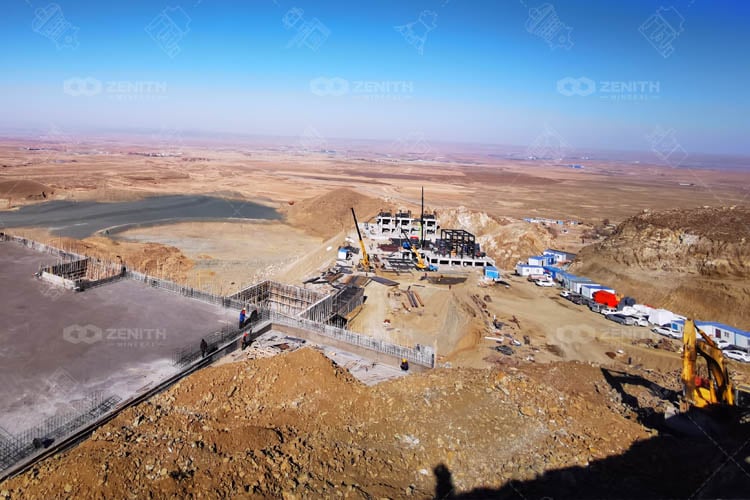
A comprehensive comparison of surface and subsurface mining, covering their definitions, key differences in operation, applicable conditions, costs, safety, and environmental impact to help guide method selection.
Fill your requirements here, and we'll send the custmized solution and quotation to you by the reserved contact information.
Copyright ©2000-2026 SHANGHAI ZENITH MINERAL CO.,LTD.

 WhatsApp

 24/7 Online