
 WhatsApp
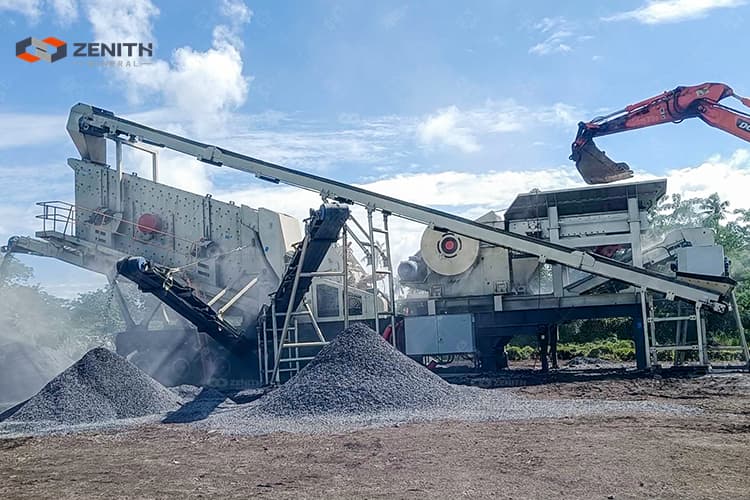
Thanks to the unmatched on-site mobility and flexible deployment capability of mobile crusher, it has stood out as core processing machinery for aggregate production, metallic ore mining, and construction & demolition (C&D) waste recycling.
Nevertheless, most first-time buyers and project contractors share one core concern: Is a mobile crushing plant suitable for my crushing project?
This guide elaborates on 5 high-profit application scenarios of mobile crushing plants, plus a professional 4-dimensional selection guide to help buyers pick cost-effective crushing equipment.
1.Why Choose a Mobile Crushing Plant?
The pain points of traditional stationary crushing plants are very clear:
Long Construction Periods: From site selection and civil engineering to equipment installation and commissioning, the process often takes several months.
Fixed Location: Once built, it cannot be relocated. When the mineral resources are exhausted, the equipment is left idle.
High Transportation Costs: Ore must be hauled from the quarry to the stationary crushing plant, and then transported out after processing. This back-and-forth loading and unloading drives up the cost per ton.
A mobile crushing plant solves all the above drawbacks by moving full crushing processes directly to raw material stockpiles.
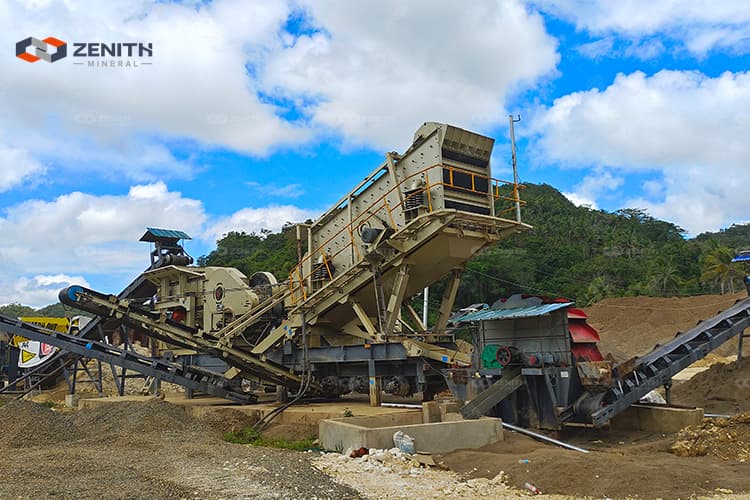
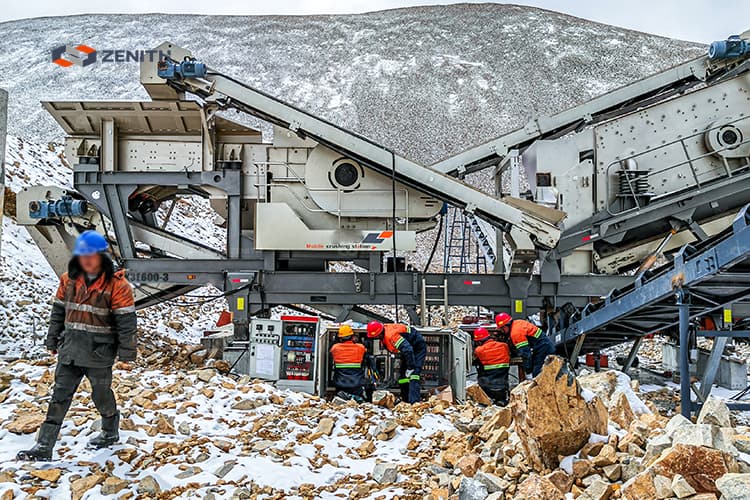
Integrated with feeding, crushing, screening and conveying systems, the mobile crushing unit adopts a self-propelled crawler or wheeled chassis. It requires no foundation civil works and can be put into formal operation right after site arrival.
Core value brought by mobile crushing plant solutions:
- Cut long-distance ore transportation expenditure drastically.
- Realize on-demand movement: equipment moves forward synchronously with project progress.
- Free cross-site transfer after project completion, maximizing overall equipment utilization rate.
2.Five High-ROI Application Scenarios for Mobile Crushing Plants
2.1 Medium & Small-Scale Quarry and Metallic Ore Mining
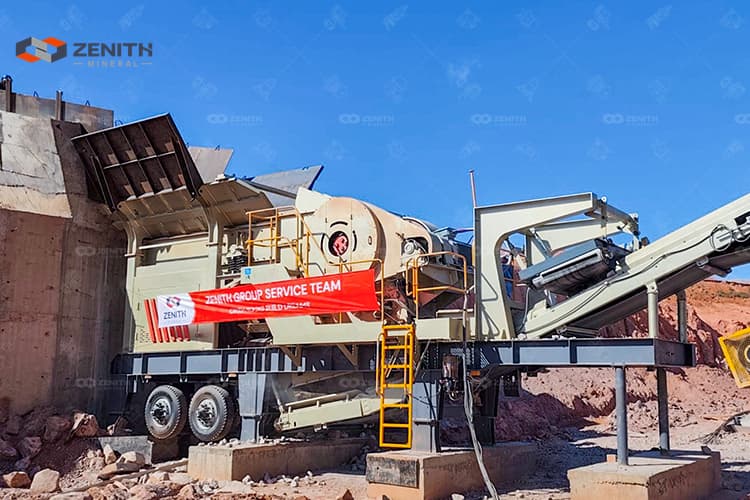
This is the most classic application scenario for mobile crushing plants. They can move with the face to shorten the transportation distance of raw materials.
Typical Materials: Granite, basalt, limestone, iron ore, etc.
On-site Advantages of Mobile Crushing Plant:
In mining operations, transport ore from the blasting/digging face to a stationary crushing plant often accounts for a substantial portion of operating costs. A mobile crushing plant can be deployed directly near the working face and move alongside it, minimizing the transportation distance of raw ore.
Configuration Recommendations of Main Equipment:
Hard rock processing: Jaw Crusher (Primary) + Cone Crusher (Secondary/Fine)
Soft rock processing: Jaw Crusher + Impact Crusher
High-Capacity Demands: Multi-unit joint operations, combining multiple mobile crushers to form a complete "primary crushing + secondary/fine crushing + screening" production line.
2.2 Construction Waste Recycling
As urbanization accelerates, construction waste (such as concrete blocks, bricks, and asphalt rubble) has come to account for 30% to 40% of total municipal waste. With growing global policy and financial support for the resource utilization of construction waste, market demand in this sector is expanding rapidly.
Typical Materials: Demolition concrete, bricks, asphalt pavement rubble, ceramic tiles, etc.
On-site Advantages of Mobile Crushing Plant:
Construction waste generation sites are typically located in urban or suburban areas where space is tight and traffic is restricted, making it impractical to build stationary processing plants.
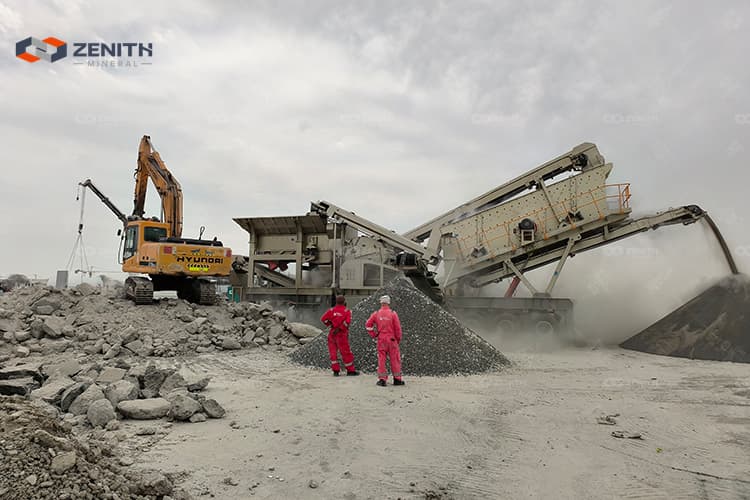
A mobile crushing plant can drive directly into demolition sites to process waste concrete and bricks into recycled aggregates on-the-spot. These aggregates can then be used for road base layers, recycled bricks, and plastering mortar, creating a closed-loop system of "demolition, processing, and reuse”.
Configuration Recommendations:
Crushing Equipment: Impact crusher (ideally suited for processing medium-hardness materials like concrete blocks and bricks).
Auxiliary Equipment: Vibrating screen + magnetic separator (to isolate reinforcing steel bars/rebar and other metallic impurities).
For Multi-Grade Recycled Aggregates: Configure multi-deck screens to achieve precise particle size classification, such as 0–5 mm, 5–20 mm, and 20–40 mm.
2.3 Highway, Railway & Bridge Projects
Linear projects such as highways and railways extend over tens or even hundreds of kilometers, demanding enormous quantities of aggregate. Relying on a fixed aggregate plant means long-distance transport - and correspondingly high logistics costs.
Mobile crushing plants, by contrast, offer convenient relocation and can advance in tandem with the project's progress.
Typical materials: Limestone, sandstone, river stones extracted along the route
On-site Advantages of Mobile Crushing Plant:
Mobile crushing plants can be deployed in sections along the construction line, utilizing available rock resources or tunnel slag nearby to process them into base aggregates, railway ballast, or backfill materials. As the project progresses to the next section, the equipment moves with it - ensuring the supply remains close at hand.
Recommended Configurations of Main Equipment:
Highway Base Course Aggregates: Jaw Crusher + Impact Crusher + Screening System
Railway Ballast: Jaw Crusher + Cone Crusher + Screening System (Note: Railway ballast has stringent requirements for particle shape and gradation)
2.4 Temporary, Contract, or Distributed Aggregate Production
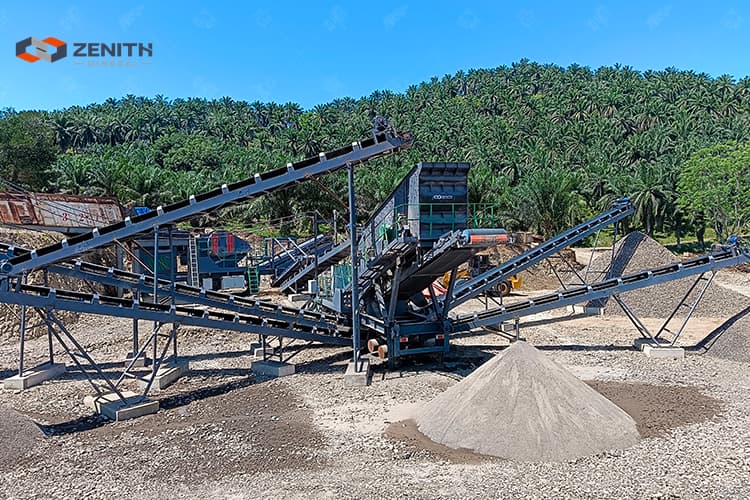
For small-scale aggregate producers and operators working multiple deposits in rotation, investing in a fixed plant is often too capital-intensive with a long payback period. A mobile crushing plant is perfect for project-based operators running multiple leases or short-term supply contracts because of its rapid production and flexible relocation.
Typical Materials: River pebbles, limestone, bluestone, etc.
On-site Advantages of Mobile Crushing Plant:
No concrete foundation or factory building is required - the equipment is ready to start production as soon as it arrives on site. When a quarry source is depleted, simply transport the equipment to the next site to continue operating, delivering higher investment efficiency.
Recommended Configurations of Main Equipment:
Hard rock processing: Jaw Crusher (Primary) + Cone Crusher (Secondary/Fine)
Soft rock processing: Jaw Crusher + Impact Crusher
Manufactured Sand Needs: Integrate a sand-making machine.
2.5 Remote Areas with Limited Infrastructure
In remote regions plagued by poor transport links and weak infrastructure (such as limited power access), the cost and difficulty of building a fixed crushing plant are prohibitively high. In these scenarios, the advantages of mobile crushing plants are particularly prominent.
On-site Advantages of Mobile Crushing Plant:
The complete system features a modular design with high integration, requires minimal site preparation, and does not need large-scale civil works or foundations. Some models also support diesel drive, so they do not rely on the power grid—making them well-suited for operations in remote areas.
3.How to Select a Right Mobile Crushing Plant?
When selecting a proper mobile crushing plant, the following four dimensions should be considered.
3.1 Material Hardness - Determines the Crusher Type
Matching raw material compressive strength and abrasiveness to the correct crushing equipment prevents premature wear and unexpected downtime.
| Material Type | Mohs Hardness | Recommended Crusher | Typical Materials |
|---|---|---|---|
| Hard Rock | ≥6 | Jaw + Cone | Granite, basalt, iron ore |
| Medium-hard | 3–5 | Jaw + Impact | Limestone, sandstone, bluestone |
| Soft / Brittle | ≤3 | Impact / Hammer | Coal, gypsum, C&D waste |
3.2 Capacity - Determines Equipment Specifications and Configurations
Defining the required hourly production capacity of the project is the second crucial step in the equipment selection process.
| Project Scale | Capacity Range | Configuration Recommendation |
|---|---|---|
| Small | 50–100 t/h | Single mobile crusher + screen |
| Medium | 100–300 t/h | Two-stage crushing (primary + secondary) + screen |
| Large | 300–800 t/h | Multiple mobile units combined -primary + secondary/tertiary + screening line |
Selection tip: When selecting equipment, it is recommended to factor in a 15% to 20% capacity margin above your actual requirements. This prevents the machinery from operating at maximum load long-term, which can negatively affect its lifespan.
3.3 Mobility Type - Tracked vs. Wheeled Chassis
Both chassis types have distinct advantages and suit different scenarios.
| Comparison Item | Tracked | Wheeled |
|---|---|---|
| Off-Road Capability | Strong; adapts well to mountainous and muddy terrain. | Relatively weak; best suited for flat, paved roads. |
| Relocation Method | Self-propelled for short-distance movement. | Requires a truck tractor to tow and relocate. |
| Long-Distance Transport | Requires a flatbed trailer for transport. | Can be towed directly on public roads by a truck tractor. |
| Site Requirements | Low; suitable for rugged and uneven terrain. | Higher; requires a flat, hardened surface. |
| Applicable Scenarios | Mines, mountainous areas, and active construction sites. | Aggregate plants, suburban areas, and rotational work across multiple sites. |
| Price | Relatively high. | Relatively economical. |
3.4 Plant Configuration - Single Unit or Combined Operation?
The choice between single unit operation and multi-unit combined configuration depends strictly on the required aggregate quality and throughput.
Single-unit operation: Suitable for simple crushing where finished product gradation is not critical (e.g., backfill, base-course cushion).
Two-stage combined: Primary + secondary crushing - meets most aggregate production requirements.
Three-stage / multi-stage combined: Primary + secondary/tertiary + screening with return conveyor - for high-spec aggregate (e.g., highway surface course, concrete sand).
Selection tip: If multiple finished product sizes are required, a screening system with return conveyor is essential to form a closed-circuit loop, ensuring the final product meets gradation specifications.
4.Summary
The real value of a mobile crushing plant is its ability to eliminate logistical waste by bringing production directly to the material source. For mining operations, construction waste recycling, linear infrastructure projects, temporary aggregate production, and remote projects, they offer distinct advantages in both cost and efficiency compared to traditional fixed production lines.
However, selecting the right equipment requires balancing your raw feed properties, throughput goals, mobility needs, and final product specifications. Treating these systems as a generic commodity can result in mismatched equipment and higher operating costs.
Looking to optimize your project's crushing circuit? Contact the ZENITH engineering group today. Our technical specialists will analyze your material properties, site conditions, and target yields to design a high-efficiency mobile crushing configuration tailored to your operation.


 24/7 Online