Surface vs. Subsurface Mining: Key Differences, Pros and Cons
Mining operations are broadly categorized into two core methods: surface mining and subsurface mining. Each technique is designed for distinct geological conditions, ore depths, and project scales, featuring unique operational workflows, cost structures, safety risks, and environmental impacts. For quarry operators, mining investors, and engineering teams, understanding the fundamental differences between surface and subsurface mining is essential for selecting cost-effective, safe, and sustainable extraction solutions.
Choosing between these methods depends on factors like the depth of the ore deposit, its grade, the surrounding geology, and economic considerations. This article provides a comprehensive comparison of surface and subsurface mining, exploring their key differences, advantages, and disadvantages to help you understand which method is used in different situations.
Core Definition & Working Principles of Mining Methods
What is Surface Mining?
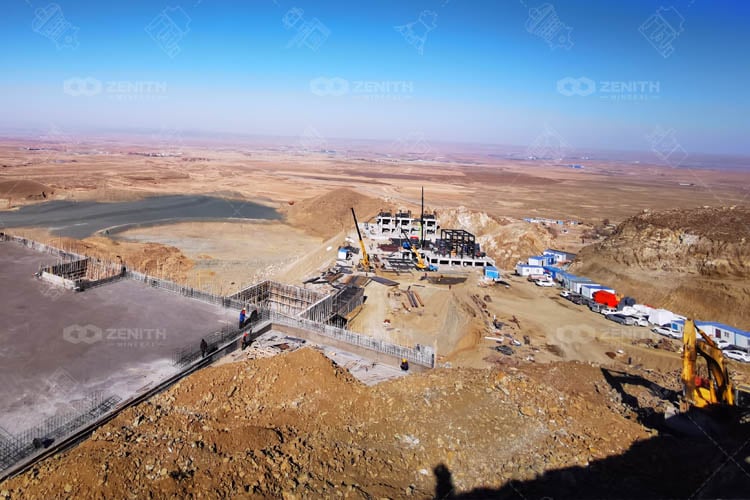
Surface mining, also known as open-pit or open-cut mining, is a shallow extraction method that removes overlying soil, rock, and vegetation (overburden) to directly expose and extract shallow ore deposits. It requires no underground tunneling and relies on large-scale earthmoving, crushing, and screening equipment to process minerals on the ground surface. This method is exclusively applicable to mineral reserves located near the earth's surface, typically within 200 meters of ground level.
Common Types of Surface Mining
- Open-pit mining: Used for large, near-surface deposits like copper, iron, and gold. It creates a large, terraced pit.
- Strip mining: Used for horizontal, tabular deposits like coal and oil sands. Overburden is removed in long strips.
- Mountaintop removal: A controversial method used in coal mining where the top of a mountain is blasted off to expose seams.
- Placer mining: Used to extract heavy minerals like gold and tin from alluvial deposits (riverbeds, beaches) using water.
What is Subsurface Mining?
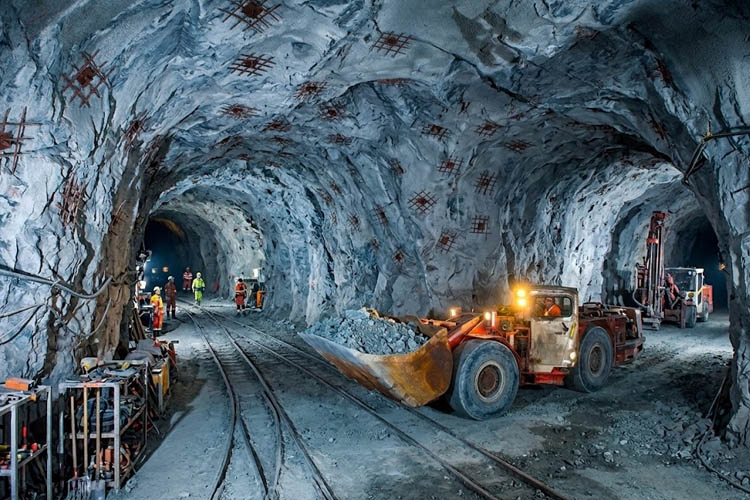
Subsurface mining refers to underground mineral extraction through artificially constructed tunnels, shafts, and roadways. Instead of removing surface overburden, workers and specialized equipment access deep ore veins or buried mineral deposits underground. It is the primary solution for high-value minerals located hundreds or thousands of meters below the surface, where surface mining is geologically and economically unfeasible.
Common Types of Subsurface Mining
- Room and pillar mining: A method where rooms of ore are extracted, leaving pillars of material to support the roof. Common in coal and potash mining.
- Longwall mining: A highly mechanized method where a long wall of coal is sheared off in a single pass, allowing the roof to collapse behind the advancing face. Used primarily in coal mining.
- Cut and fill mining: Ore is extracted in horizontal slices, and the void is filled with waste rock or cemented backfill to support the walls. Used in steep, narrow deposits.
- Block caving: A large-scale underground method where ore is undercut, causing it to cave in under its own weight. Used for massive, low-grade deposits like copper and molybdenum.
Key Differences Between Surface and Subsurface Mining
Surface mining and subsurface (underground) mining are two fundamental mineral extraction technologies in the modern mining industry. Their operational logics, site adaptability, production capacity, equipment configuration, economic returns, safety hazards, and environmental footprints differ completely.
1. Mining Principle and Operation Method
Surface Mining: Surface mining follows the principle of "remove first, then mine." The core idea is to strip away all overburden (soil, rock, and vegetation) covering the ore body. Once exposed, the ore is extracted in open, terraced benches from the top down. This is a large-scale, continuous operation carried out in an open environment.
Subsurface Mining: Subsurface mining follows the principle of "access first, then extract." The core idea is to construct vertical shafts or horizontal adits from the surface to the deep ore body. An intricate network of tunnels is then developed underground. Ore is extracted from these confined spaces, relying entirely on artificial ventilation, lighting, and ground support for safe operation.
2. Applicable Conditions
Surface Mining: It is only suitable for shallow, large-area, and continuously distributed ore deposits, generally within 0–200 meters below the ground. It applies to flat or gently hilly terrain with thick overburden that can be mechanically stripped in batches. Ideal minerals include limestone, granite, sandstone, shallow coal, bauxite, and other bulk low-to-medium value minerals. Surface mining cannot economically exploit deep, scattered, or narrow vein ore bodies due to excessive overburden removal costs.
Subsurface Mining: It is designed for deeply buried, high-grade, narrow, or vein-type ore deposits, usually deeper than 200 meters. It adapts to complex mountainous terrain, ecological protection zones, and urban peripheral areas where large-scale surface land destruction is prohibited. It is widely used for deep coal, gold, iron ore, copper, nickel, and rare metal mines. It works regardless of surface topography and is not limited by surface vegetation or buildings.
3. Mining Efficiency & Production Output
Surface Mining: Surface mining delivers extremely high production efficiency and massive daily output. Open working space allows the deployment of large-scale, high-power machinery, enabling continuous blasting, excavation, and conveying. The mineral recovery rate reaches 85%–95% with almost no ore residue. Large open-pit mines can achieve daily output of 50,000 to 200,000 tons and support fully automated 24-hour operation. The production cycle is short, and capacity expansion is flexible.
Subsurface Mining: Subsurface mining has limited efficiency and low single-line output. Tunnel space restricts equipment size, personnel movement, and material transportation. Ore extraction proceeds in small batches with intermittent operation. The overall mineral recovery rate is only 40%–70% due to unreachable residual ore and protective ore pillars. Most underground mines have a daily output of 1,000 to 20,000 tons. Production is easily restricted by tunnel maintenance, ventilation cycles, and safety inspections.
4. Commonly Used Mining Equipment
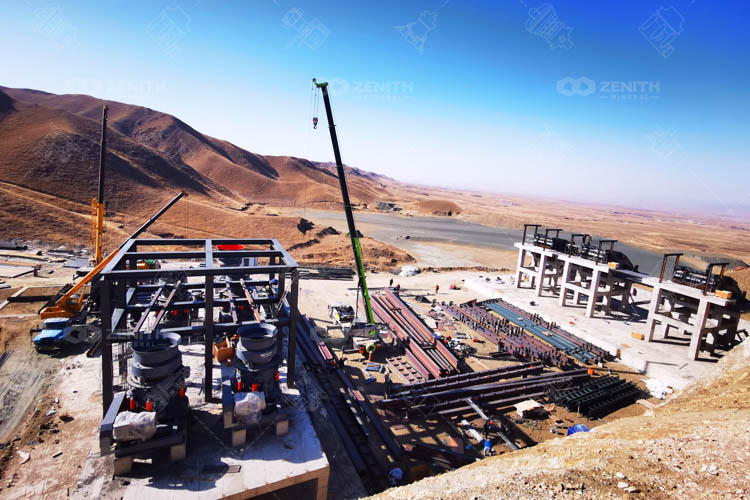
Surface Mining Equipment: Surface mining relies on large-scale open-pit mechanical sets with high throughput and strong mobility. All machines are designed for heavy-load open-air continuous operation. Typical equipment includes:
- Drilling and Blasting: Large rotary blast-hole drills, down-the-hole drills.
- Loading: Giant electric shovels, hydraulic excavators (with bucket capacities of tens of cubic meters).
- Transport: Ultra-class haul trucks (with payloads of 300-400 tonnes) and large-capacity conveyor systems.
- Auxiliary: Bulldozers, graders, water trucks for dust suppression.
Subsurface Mining Equipment: Underground mining requires specialized explosion-proof, compact, and sealed equipment adapted to narrow tunnels and hazardous environments. All electrical equipment must meet mine explosion-proof standards. Typical equipment includes:
- Development and Excavation: Jumbo drills (for blastholes), roof bolters, shotcrete sprayers (for ground support).
- Production: Long-hole production drills, explosive chargers, LHDs (Load-Haul-Dump machines, also known as scooptrams), and underground mining trucks.
- Support Systems: Large ventilation fans, dewatering pumps, hoisting systems (for shafts), and underground crushers.
5. Production Cost & Profitability
- Surface Mining: Features significantly lower Operating Expenditure (OpEx) and Capital Expenditure (CapEx) per ton. Profitability is driven by high-volume economy of scale, even when extracting lower-grade ores.
- Subsurface Mining: Incurs substantially higher CapEx and OpEx per ton due to continuous underground ventilation, dewatering pumps, ground support (rock bolts/shotcrete), and shaft hoisting. Profitability relies heavily on high-grade ore values to offset steep operating costs.
6. Safety Risks & Operational Hazards
- Surface Mining: Presents a much lower worker safety risk profile. Operations take place in open air with high visibility and good ventilation, eliminating underground cave-in or gas buildup hazards (primary risks are bench slope instability and heavy equipment traffic).
- Subsurface Mining: Carries a high safety risk profile. Operators face constant hazards including underground rockbursts, roof cave-ins, toxic/explosive gas accumulation (methane, CO), heat exposure, and dust-induced respiratory risks.
7. Environmental Impact
Surface Mining:
- Primary Impact: Causes massive land disturbance, deforestation, and habitat destruction. Alters landscapes dramatically. Generates enormous volumes of waste rock and tailings, leading to risks of Acid Mine Drainage (AMD) and heavy metal contamination of water sources.
- Restoration: Land reclamation (backfilling, re-vegetation) is possible but is a massive, long-term, and expensive undertaking. Technology for reclamation is relatively mature.
Subsurface Mining:
- Primary Impact: Surface disturbance is much smaller. However, it can cause land subsidence or sinkholes over abandoned workings. It significantly alters the groundwater hydrology (lowering water tables and changing flow directions). Also produces waste rock and tailings that require management.
- Restoration: Surface restoration is simpler compared to open pits. However, long-term monitoring and management of subsidence and water quality remain persistent challenges.
Advantages and Disadvantages of Surface Mining
Advantages
- High Production Efficiency & Recovery: Surface mining achieves a mineral recovery rate of up to 95%, far higher than underground mining. Unrestricted operating space supports large mechanical equipment, enabling mass production and shorter project cycles.
- Low Investment & Operational Costs: It eliminates expensive underground tunnel construction, ventilation, and safety monitoring systems. With simple infrastructure configuration, it features lower upfront CAPEX and unit production costs, ideal for large-volume low-grade mineral projects.
- Superior Working Safety: Open-air operation avoids underground hazards such as gas accumulation, roof falls, and hypoxia. The working environment is intuitive and controllable, greatly reducing casualty and accident rates.
- Simple Operation & Maintenance: Surface mining processes are standardized and mechanized. Equipment installation, inspection, and daily maintenance are more convenient, with lower technical thresholds for workers.
Disadvantages
- Severe Ecological Damage: It completely strips surface vegetation and topsoil, causing large-scale land desertification, soil erosion, and landscape destruction. Post-mining land reclamation requires massive capital and time investment.
- Strict Terrain Limitations: It is only suitable for shallow and flat ore deposits. For deep-buried minerals, surface mining requires excessive overburden removal, resulting in extremely poor economic benefits.
- Obvious Environmental Pollution: Open-air operation generates large amounts of dust, noise, and tailings, affecting surrounding farmland, water sources, and residential areas, requiring supporting dust removal and environmental protection facilities.
Advantages and Disadvantages of Subsurface Mining
Advantages
- Minimal Surface Environmental Impact: Subsurface mining does not destroy surface vegetation and terrain. The ground landscape remains largely intact, making it suitable for mining in forested, residential, or farmland-intensive areas with strict environmental protection requirements.
- Adaptable to Deep High-Grade Minerals: It is the only viable solution for deep-buried ore veins, high-value metals, and coal deposits that cannot be exploited by surface methods. It enables precise selective mining of high-grade ores to reduce resource waste.
- Low Weather Interference: Underground operations are unaffected by rain, snow, wind, and extreme temperatures, ensuring stable and continuous annual production.
Disadvantages
- Extremely High Costs: Long-term tunnel excavation, roadway support, underground power supply, ventilation, and drainage systems lead to huge upfront investment and high daily operating and maintenance costs.
- High Safety Hazards: Confined underground spaces face multiple risks including tunnel collapse, gas explosion, water inrush, toxic gas leakage, and oxygen shortage, requiring strict real-time safety monitoring.
- Low Production & Recovery Efficiency: Limited underground space restricts equipment scale and operation efficiency. Residual ores in complex underground structures cannot be fully extracted, resulting in low overall resource utilization.
- Complex Operation & Management: It requires professional underground operation teams, regular safety inspections, and equipment maintenance, with higher labor and technical management costs.
How to Choose Between Surface and Subsurface Mining
The decision to use surface or subsurface mining is driven by several key factors:
- Depth of the deposit: If the ore is within 200 meters of the surface, surface mining is usually the first choice. Deeper deposits generally require underground methods.
- Grade and size of the deposit: High-grade, massive deposits may justify the higher cost of underground mining. Low-grade, large-tonnage deposits are often more suitable for surface mining.
- Ore body geometry: Flat, tabular deposits are ideal for strip mining or longwall mining. Steeply dipping, narrow veins are better suited for underground methods like cut and fill.
- Economic factors: The market price of the mineral, capital availability, and operating costs all influence the decision.
- Environmental regulations: Strict environmental laws in some regions may restrict surface mining, making underground methods the only viable option.
- Safety considerations: The geological stability of the area and the risk of subsidence or rock bursts are critical factors.
Key Takeaways on Surface vs. Subsurface Mining
Surface mining and subsurface mining are the two fundamental approaches to extracting minerals from the earth. Each has its own set of advantages, disadvantages, and environmental and safety considerations. The choice between them depends on a complex interplay of geological, economic, and regulatory factors.
- Surface mining is cost-effective and productive for shallow deposits but has a large environmental footprint.
- Subsurface mining is essential for deep, high-grade ores but is more expensive, dangerous, and has lower recovery rates.
Ultimately, both methods are essential to meet the world's growing demand for minerals. The future of mining lies in improving the efficiency, safety, and environmental performance of both surface and underground operations through technology, automation, and sustainable practices.
Frequently Asked Questions
What is the main difference between surface and subsurface mining?
The primary difference is deposit depth and extraction method. Surface mining strips away topsoil and overburden rock to extract shallow deposits (<200m) from open pits. Subsurface (underground) mining digs shafts and tunnels to extract deep mineral deposits (>200m) with minimal surface disturbance.
Which mining method has a higher mineral recovery rate?
Surface mining has a much higher recovery rate (85%–95%) compared to subsurface mining (40%–70%), as it allows full access to all shallow ore resources without underground mining limitations.
What are the advantages of surface mining over subsurface mining?
Surface mining offers lower capital and operating costs per ton, higher production throughput, higher ore recovery rates (90%-95%), and safer open-air working conditions with no underground cave-in risks.
What are the disadvantages of subsurface mining?
Subsurface mining incurs higher capital costs for shaft ventilation, dewatering, and tunnel support. It carries higher safety risks and lower ore recovery rates due to support pillars left behind.
How do underground mining trucks differ from surface mining trucks?
Underground mining trucks feature low-profile, narrow articulated chassis designed for tight, low-clearance tunnels. Surface haul trucks are ultra-large (up to 300+ tons) and tall, designed for wide open-pit haul roads. Underground trucks also increasingly use Battery Electric Vehicles (BEVs) to reduce emissions.



 WhatsApp

 24/7 Online