Gold ore beneficiation and processing is a complex, multi-stage operation. It is a long journey that spans from geological exploration, mining, crushing and grinding, classification and concentration, all the way to chemical extraction and smelting into gold bars. For mine investors, the most critical question when evaluating a gold deposit is always: How can we extract gold efficiently and cost-effectively?
In this article, we highlight the complete gold ore processing workflow, key gold ore crusher, and the primary gold extraction methods used in modern mining operations.
Gold ores are broadly classified into two primary geological types based on their occurrence and formation: Placer Gold Ore and Lode Gold Ore.
Formation: Formed through the natural weathering, erosion, and transport of primary hard rock gold deposits, which subsequently accumulate in riverbeds, alluvium, or sedimentary deposits.
Characteristics & Processing: Gold exists mainly as free, coarse metallic particles (free gold). Due to the high specific gravity of gold, placer deposits are relatively easy to recover using cost-effective gravity separation methods.
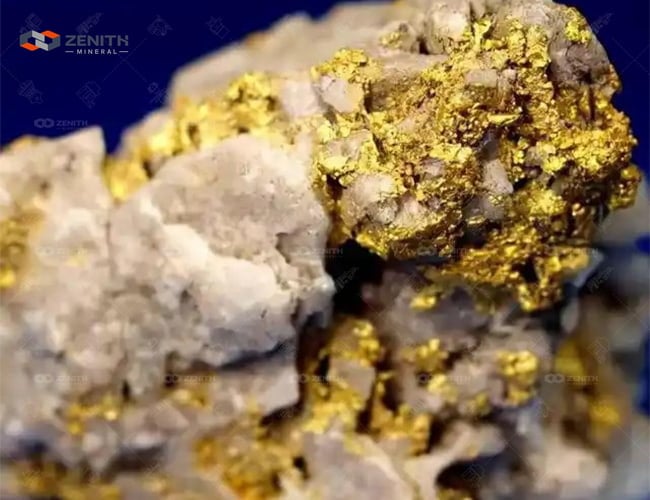
Formation: Gold is hosted within bedrock fractures, quartz veins, or specific mineralized rock formations.
Characteristics & Processing: It requires drilling and blasting for mining, followed by complex beneficiation processing circuits. Lode gold represents the vast majority of global commercial gold production.
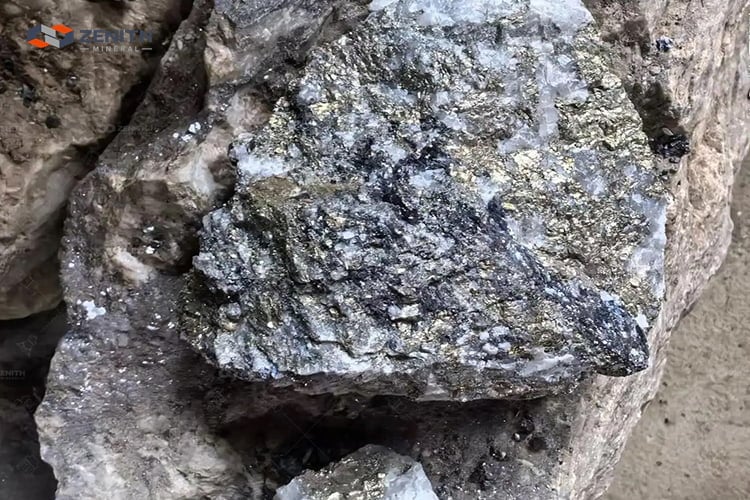
From raw ore to pure gold bullion, gold ore beneficiation involves a series of physical, chemical, and metallurgical processing stages:
Drilling & Blasting: Break intact gold-bearing rock formations into optimal boulder sizes suitable for loading, hauling, and primary crushing.
Loading & Hauling: Following blasting, large hydraulic excavators or electric rope shovels load the gold ore into heavy-duty haul trucks, which transport it to primary crushers or processing facilities.
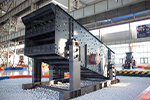
Crushing, Grinding & Screening: Gold ore entering the processing plant undergoes multi-stage crushing and grinding. This gradually reduces particle size to achieve the mineral liberation—separating gold particles from host matrix rocks to prepare for subsequent beneficiation process.
Gravity Separation: Classified fine slurry flows into gravity separation circuits. This process uses the significant density contrast between gold and gangue minerals to recover coarse, free gold early in the circuit.
Flotation: Gravity separation tailings contain significant amounts of unrecovered gold-bearing sulfide minerals (such as pyrite, pyrrhotite, and arsenopyrite). The gold within these minerals exists as fine inclusions or crystal structure; as it cannot be effectively recovered through gravity separation, a flotation process is required.
Thickening: Thickening is a critical transitional step between gold ore beneficiation and metallurgy. The purpose of this stage is to adjust the slurry concentration, thereby establishing suitable process conditions for the subsequent cyanidation leaching.
Leaching: Leaching is a core stage in gold processing—dissolving the gold within the ore from the solid phase into the liquid phase, thereby creating the conditions for subsequent recovery. Modern gold mining operations primarily employ the cyanidation leaching process (such as CIL/CIP or heap leaching).
Adsorption, Desorption & Recovery (ADR): The ADR plant is the central facility where activated carbon efficiently recovers dissolved gold from leach solution.
Electrowinning: Through electrowinning, dissolved gold is converted back into solid metal.
Smelting and Casting: After collection and pretreatment, gold-bearing cathode materials are fed into a furnace. High temperatures melt the gold, silver, and other metals, while impurities are transferred into the slag. The molten gold metal is poured into molds, where it cools and solidifies to form gold bars.
Among all gold ore processing stages, crushing and grinding are the most energy-intensive and capital-heavy phase, typically accounting for 50% to 70% of a gold ore beneficiation plant's total energy consumption. Selecting the right crushing and grinding equipment directly determines a gold deposit's operational cost (OPEX), throughput efficiency, and overall profitability.
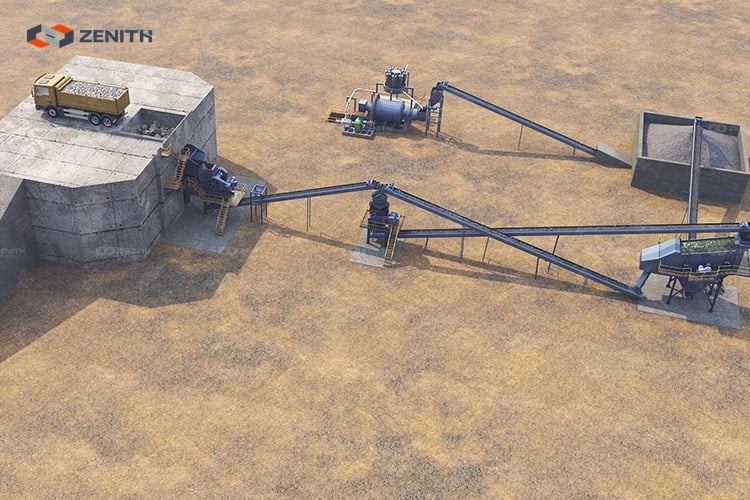
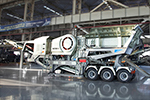
Run-of-mine gold ore, following drilling and blasting, can contain blocks exceeding one meter in size. To reduce the giant gold ore to a particle size suitable for subsequent beneficiation and leaching, it must undergo staged crushing and grinding.
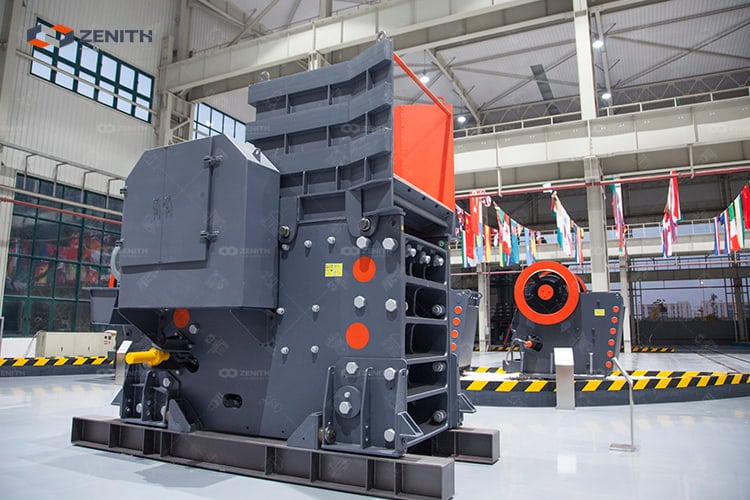
Primary crushing handles the toughest first stage—reducing giant, blasted ROM (Run-of-Mine) gold ore boulders down to 150–300 mm. Relying on force-compression crushing principles, the Jaw Crusher serves as the ideal crusher machine in the primary crushing stage of gold mines. Key advantages of ZENITH Jaw Crushers in gold ore coarse crushing:
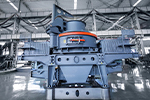
Secondary crushing reduces primary crusher discharge down to 50–80 mm, while tertiary crushing further reduces the ore to 12–19 mm—preparing the ideal feed size for downstream grinding circuits or heap leaching operations.
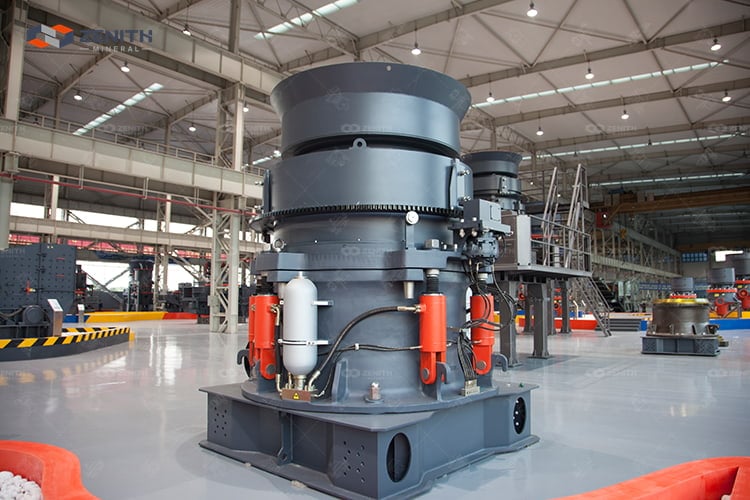
Cone crusher is the main equipment used for medium and fine crushing of gold ore. Featuring a unique crushing chamber design, they break ore through compression, bending, and shearing actions between the mantle and concave, offering the dual advantages of a high reduction ratio and low energy consumption.
ZENITH HPT Multi-Cylinder Hydraulic Cone Crusher features the following advantages while be used for gold ore crushing:
Strong Crushing Force & High Crushing Efficiency: Delivers superior crushing force against ultra-hard surrounding rock commonly found in gold deposits (such as quartz veins). This promotes better mineral liberation, ensuring gold particles are fully liberated from matrix rocks to maximize downstream flotation and cyanidation recoveries.
High Crushing Ratio (More Crushing, Less Grinding): Achieves exceptional particle size reduction. By feeding finer product into the grinding mill, it significantly reduces the grinding circuit load and overall energy consumption.
Wear Resistance & Extended Service Life: Specially engineered for highly abrasive gold ores, the optimized crushing cavity ensures uniform liner wear, extending the lifespan of wear parts and lowering operating costs.
Hydraulic Cavity Clearing System: Automatically clears the chamber when uncrushable materials (such as tramp iron) enter or when overloads occur. This automatic protection drastically reduces downtime caused by blockage or iron passage, guaranteeing continuous, uninterrupted operation of the whole gold ore processing plant.
Grinding is the direct continuation of the crushing process, reducing gold ore down to an ultra-fine particle size below 0.074 mm (-200 mesh). This extreme size reduction ensures that gold particles are fully liberated from host rocks, enabling optimal recovery in downstream gravity, flotation, or cyanidation circuits.
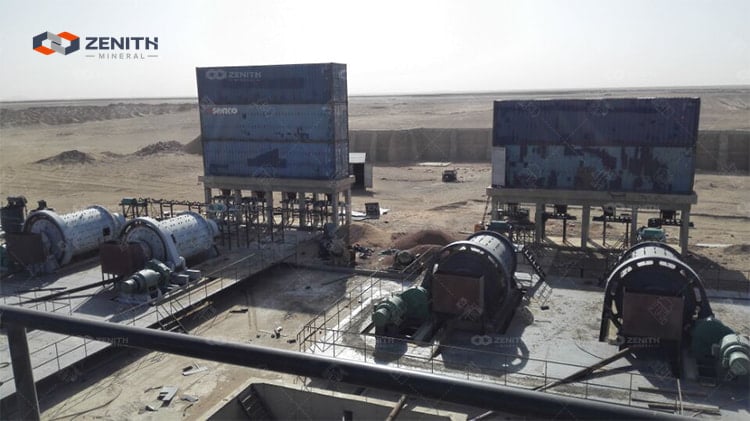
Gold ore beneficiation plants primarily rely on two types of grinding mills:
Semi-Autogenous Grinding (SAG) Mill: Uses the gold ore itself as grinding media, with a small proportion of steel balls added (roughly 5%–15%). This configuration can achieve high reduction ratios in a single stage, simplifying the process, and reducing plant footprint. It is well-suited for hard or moderately hard, brittle gold ores.
Ball Mill: Relies entirely on steel balls as grinding media to achieve precise control of product fineness and is often used for second-stage grinding. When combined with a SAG mill and a cone crusher, it forms the industry-standard "SABC" Circuit (SAG Mill + Ball Mill + Pebble Crusher), which represents the preferred configuration for modern, large-scale gold ore processing plants.
Based on operating principles, mainstream extraction methods of gold ore fall into two major categories: Physical Separation and Chemical Extraction. In practice, modern processing plants typically combine both to maximize recovery rate of gold.
Native gold boasts an extremely high density of up to 19g/cm3, whereas typical gangue minerals range between 2.6-2.8g/cm3. This significant density contrast makes gravity separation the most cost-effective method for recovering coarse, free gold.
Gravity separation serves as the first line of defense in gold recovery, capturing coarse free gold early in the circuit at an exceptionally low operating cost. The remaining fine or encapsulated gold is then passed downstream to chemical cyanidation leaching.
This strategy drastically reduces cyanide consumption, optimizes chemical leaching efficiency, and significantly boosts overall gold recovery rates and project profitability.
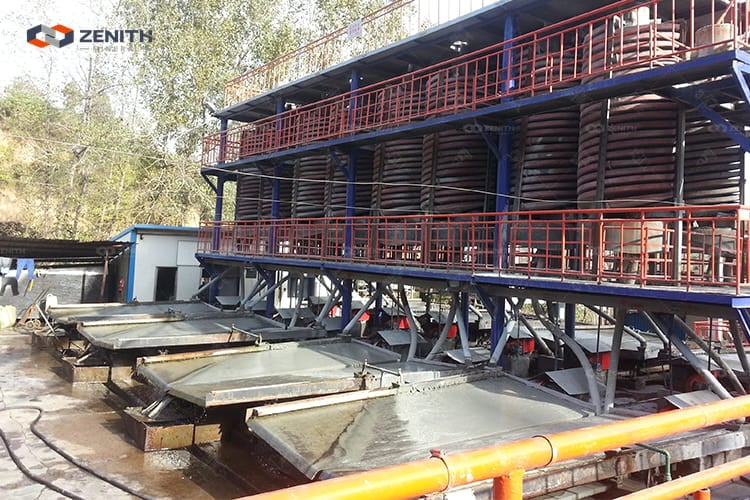
Spiral Chutes: Deliver large handling capacities with extremely low operating costs. They are primarily used in the roughing stage to achieve preliminary enrichment of heavy gold-bearing minerals from the slurry.
Shaking Tables: Feature high separation precision and sharp mineral stratification. Generally applied in the cleaning/refining stage, they directly yield high-grade gold concentrates.
Jigs: Utilize pulsating water currents to loosen the mineral bed and stratify particles by density. They are ideal for handling coarser-grained gold ores.
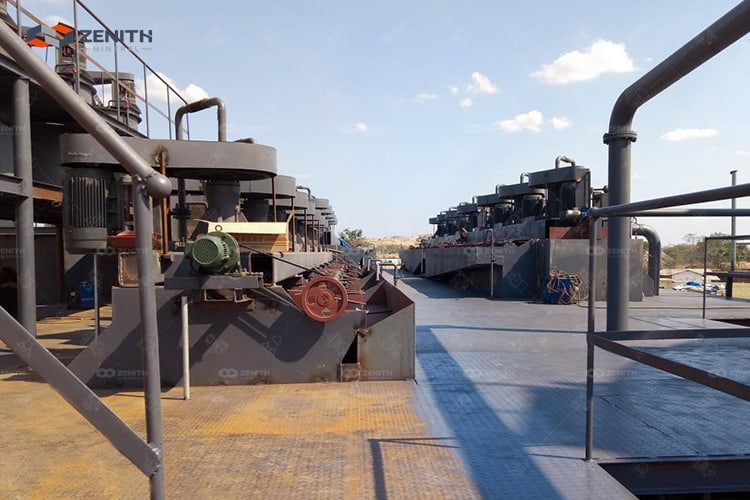
For sulfide ores, ultra-fine gold is frequently surrounded within sulfide minerals such as pyrite. Flotation utilizes collectors to render the gold-bearing sulfide minerals hydrophobic so they attach to air bubbles and float to the surface, forming a gold-bearing sulfide concentrate that is separated from the gangue.
For sulfide-type gold ores, flotation is one of the core beneficiation processes. The gold-bearing sulfide concentrate produced by flotation can be:
Thickening is the key transition stage bridging downstream mineral separation and extractive metallurgy. The primary purpose of this stage is to adjust the pulp density, creating optimal process conditions for subsequent cyanidation leaching.
Why Is Thickening Essential Before Leaching?
After grinding, gravity separation or flotation, the mineral slurry contains a massive volume of process water. Directly feeding this low-density slurry into leaching tanks would significantly increase reagent consumption and reduce reaction efficiency.
Therefore, the slurry must pass through high-efficiency thickeners for dewatering and solid concentration prior to leaching.
Operating Principle of Thickeners
ZENITH thickeners operate based on continuous gravity sedimentation:
Solid Sedimentation: Solid mineral particles continuously settle to the bottom under gravity.
Clarified Overflow: Clean, clarified water overflows from the top and is recovered for recycling within the gold ore beneficiation plant.
Concentrated Underflow: The high-density, thickened mineral slurry is discharged from the bottom and pumped to the next leaching stage (such as CIP or CIL).
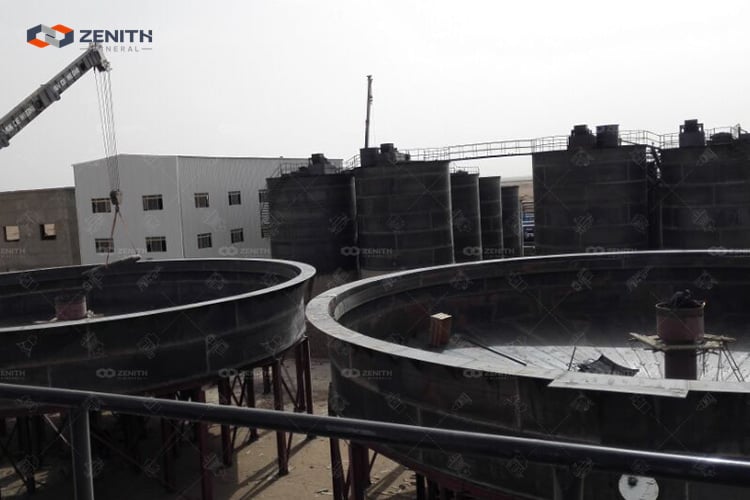
Leaching is the foundational metallurgical process in gold extraction—dissolving solid gold into a liquid phase to prepare for downstream recovery. Modern gold mines primarily rely on cyanidation leaching, which splits into two main technical routes based on ore grade, mineralogy, and project economics:
| Comparison | Heap Leaching | Agitated Leaching (CIL/CIP) |
|---|---|---|
| Applicable Ore Type | Low-grade oxide ores | High-grade ores, flotation gold concentrates |
| Process Flowsheet | Ore stacked on leach pads- Drip/spray cyanidation solution- Collect Pregnant Leach Solution (PLS) | Mineral slurry agitated in leach tanks, maintaining full contact with cyanide for 24–72 hours |
| Key Advantages | Low capital expenditure (CAPEX), massive scale, capable of processing ultra-low-grade ores | Rapid leaching kinetics, high gold recovery rates (>90%) |
| Key Limitations | Longer leaching cycle (60–360 days), lower gold recovery rates (60%–80%) | Higher capital investment (CAPEX) and operating reagent costs (OPEX) |
Gold ore processing is a complex, multi-disciplinary journey. Transforming raw ore into high-purity gold bullion requires a seamless blend of crushing, grinding, chemical leaching, electrochemical deposition, and high-temperature smelting. Every stage in the circuit impacts your overall efficiency and profitability.
As a leading global manufacturer of mining and mineral processing machinery, ZENITH provides comprehensive, end-to-end solutions - including heavy-duty crushing equipment, advanced grinding mills, beneficiation plants, and expert engineering consultation. We empower mine operators to achieve higher gold recovery rates at significantly lower operational costs per ton.
Contact ZENITH today to get customized equipment configurations, flowsheets, and project quotations tailored to your specific gold deposit!


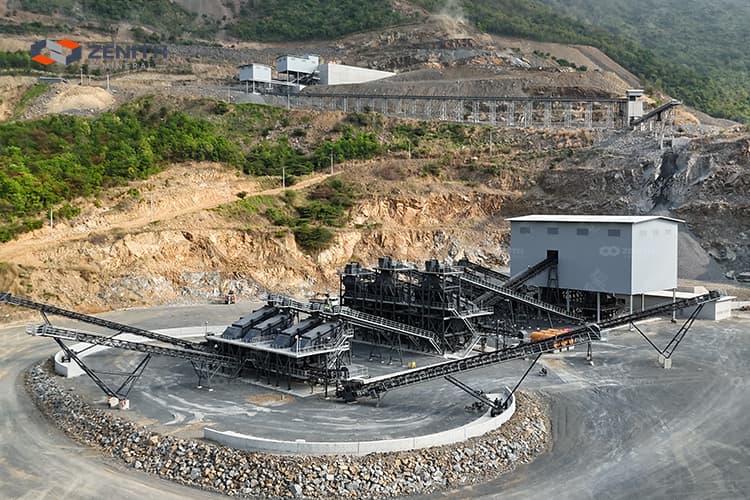
Crushing is the first step of mining operation, and the choice of crushing circuit directly determines the efficiency of the entire crushing line. This article explains what a crushing circuit is, how open and closed circuits work, and how to select the best option across different scenarios.
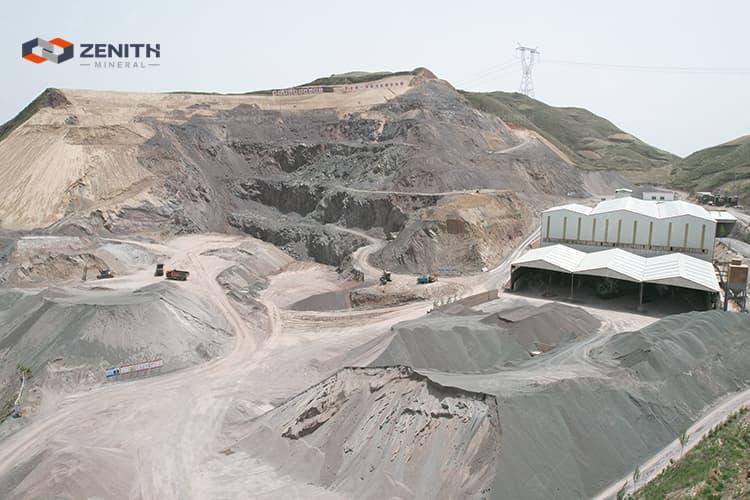
Starting a quarry business is a major undertaking that offers substantial returns but involves a complex process; this article guides you step by step, from preliminary research to the commencement of formal production.
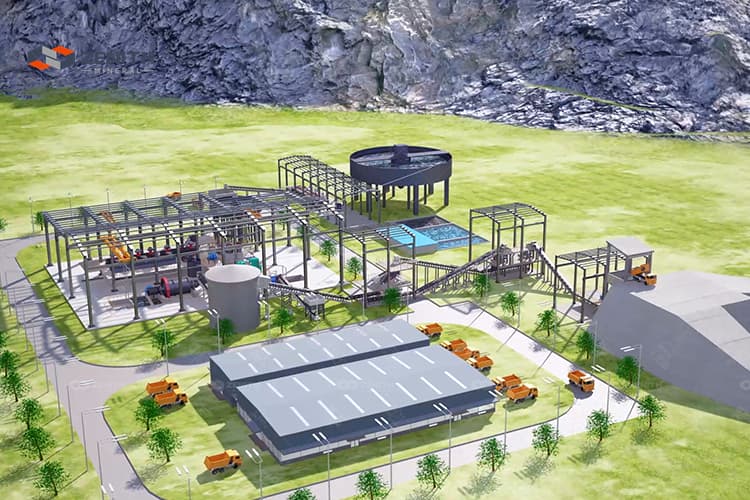
Leveraging its high density, gravity separation is used as the core technique to achieve efficient separation of low-grade, fine-grained disseminated tantalum-niobium ores. Here is the complete tantalum-niobium ore beneficiation process centered on gravity separation.
Fill your requirements here, and we'll send the custmized solution and quotation to you by the reserved contact information.
Copyright ©2000-2026 SHANGHAI ZENITH MINERAL CO.,LTD.

 WhatsApp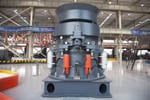

 24/7 Online