Crushing is the initial and critical stage of any mineral processing, where circuit configuration directly impacts overall plant efficiency and operating costs. This guide highlights how open and closed circuits operate, compares their features, and outlines how to select the optimal flowsheet for your site.
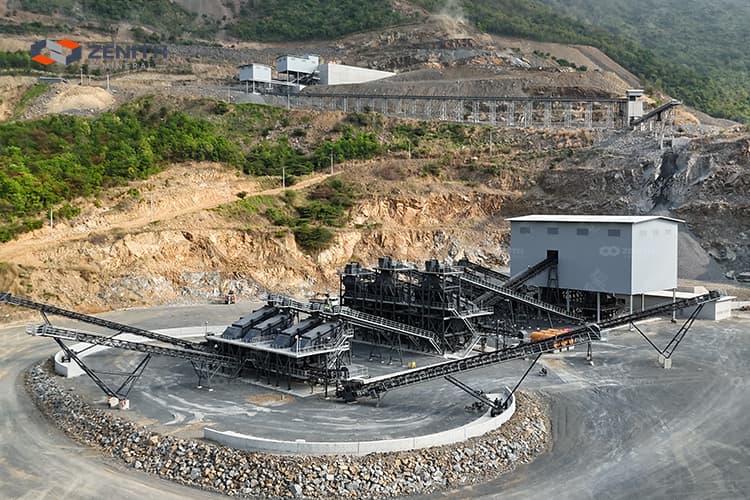
A crushing circuit (or crushing process) is the complete process route that raw ore follows from feed to final product size. It is not a single piece of equipment, but an integrated system of crushers, vibrating screens, feeders, and conveyor belts operating in coordination.
A complete crushing circuit typically consists of multiple crushing stages:
| Crushing Stage | Feed Size | Discharge Size | Common Equipment |
|---|---|---|---|
| Primary Crushing | 500-1000mm | 100-250mm | Jaw crusher, Gyratory crusher |
| Secondary Crushing | 100-250mm | 20-80mm | Impact crusher, Cone crusher |
| Tertiary/Quaternary Crushing | 20-80mm | 5-20mm | Cone crusher, VSI crusher |
As material passes from stage to stage, the core design decision comes down to one operational rule: Should material pass through a crusher once and move directly downstream, or should it be screened and recirculated if it remains oversized?
This leads to the two primary crushing processes- open crushing circuit and closed crushing circuit.
In an open circuit crushing process, material passes through the crusher and discharges directly to the next process stage without a return loop. Whether or not the crushed stream contains oversized particles, all materials are fed into the next operation.
Typical flow:
Raw Ore → Primary Crushing → Secondary Crushing → Tertiary Crushing → Final Product
In some open-circuit systems, an additional screening equipment is installed after crushing. However, the big particles from vibrating screen are not returned to the crusher, they are handled as a by-product or routed to the next stage instead.
Open circuits offer simplicity, fast production, and low initial capital, making them ideal when strict particle size control is not required:
Primary crushing stage: Run-of-mine ore comes in a wide range of sizes and will be further crushed downstream, so recirculation offers little benefit at this stage.
Soft, friable materials: Medium-to-low hardness ores such as limestone and coal gangue are easy to break — the open-circuit product already meets size requirements without screening.
Small to medium-scale mines: Crushing projects with limited capital investment and moderate requirements for product size precision.
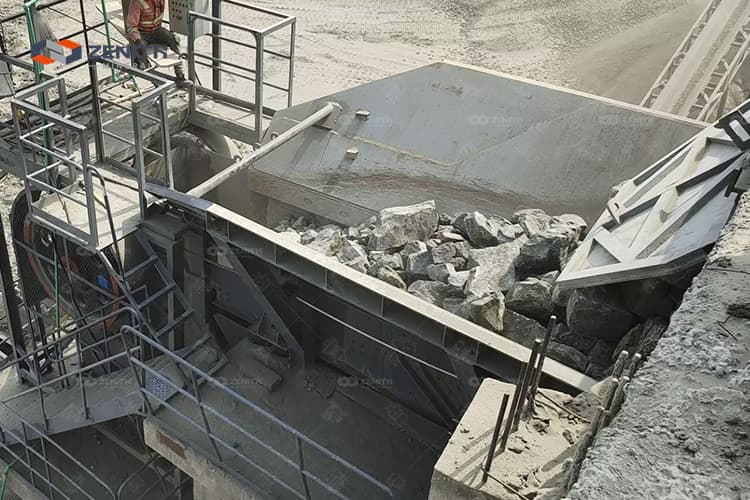
In a closed circuit crushing process, materials are discharged from the crusher and passed to a screening unit. Oversized particles are returned to the crusher for re-crushing, while undersized materials move on to the next process.
This creates a continuous loop: Crushing → Screening → Recirculating. Materials remain in this loop until they are fully reduced to the target particle size.
Typical flow:

Depending on whether screening is placed before or after the crusher, closed circuit crushing is further divided into two main types:
Pre-Screening Closed Circuit (Screening Before Crushing)
Materials are screened before entering the crusher to remove small particles. Only the oversize material is fed into the crusher, significantly reducing the load of crusher and preventing over-crushing.
Check-Screening / Control-Screening Closed Circuit (Screening After Crushing)
Materials are screened after passing through the crusher. The screen acts as a quality checkpoint, intercepting non-compliant material and returning it for re-crushing.
In the design of a crushing process, these two approaches are often combined to leverage the strengths of each - pre-screening to reduce unnecessary crusher load, and check-screening to guarantee product quality, a dual-stage logic that ZENITH experts tailor to maximize efficiency for every client's site.
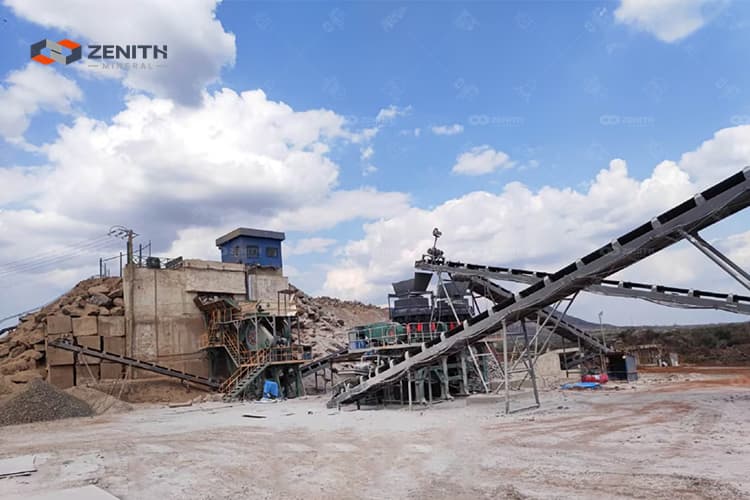
While closed circuit plants require more equipment footprint and longer operational cycles, they deliver precise, highly consistent sizing for demanding operations:
Fine crushing stages: Essential when strict top-size control is required and oversize particles cannot be tolerated.
Hard rock applications: High-hardness ores like iron ore and granite that are difficult to reduce to spec in a single crushing stage.
Medium & large-scale operations: High-capacity mines and quarries with stringent demands for product uniformity.
Demanding downstream processes: Ideal for tight grinding feed requirements or heap leaching where uniform particle size ensures optimal permeability.
| Comparison | Open Circuit | Closed Circuit |
|---|---|---|
| Flowsheet Complexity | Simple & short flow | Complex; includes screening & recirculation |
| Equipment Cost | Lower | Higher |
| Product Size | Average; prone to oversize particles | Superior; precise size control |
| Over-Crushing Risk | Higher | Minimized & strictly controlled |
| Plant Footprint | Smaller | Larger |
| Operation & Maintenance | Simple | Relatively complex |
| Ideal Crushing Stage | Primary & secondary crushing | Fine & ultra-fine crushing |
Selecting between open and closed circuits is not about finding the good one; rather, it is a matter of determining which is better suited to your specific scenario. When selecting a crushing process, the decision should be based on the following three dimensions.
Choose Closed-Circuit Crushing When:
High-quality aggregate: Demands strict control over finished product size, particle shape, and gradation to consistently deliver high-spec, premium aggregates.
Strict downstream feed requirements: The downstream grinding process imposes rigid limits on maximum particle size (e.g., a 12mm feed limit); consequently, the crushing stage must supply material with uniform sizing and a controlled maximum particle size to reduce energy consumption and enhance grinding efficiency.
Choose Open-Circuit Crushing When:
Relaxed size requirements: Only coarse reduction is needed (e.g., crushing down to below 50mm), where mixed particle sizes do not affect subsequent operations.
Subsequent regrinding stage: A certain amount of oversized material is permitted to pass through for centralized processing in the next stage.
High Hardness & Abrasive Materials (Granite, Iron Ore, Basalt, etc.)
Recommendation: Closed Circuit
A single crushing pass rarely meets target specifications. A closed circuit relies on a recirculating load to guarantee product size compliance while minimizing over-crushing, optimizing mineral liberation, and improving overall recovery rates.
Soft & Friable Materials (Limestone, Coal, Gypsum, etc.)
Recommendation: Open Circuit
Single-pass reduction can typically achieve the required particle size. In terms of cost-effectiveness, open circuit crushing process is generally more advantageous.
High Moisture, Sticky & Clay-Rich Materials
Recommendation: Prefer Open Circuit (or proceed with caution on Closed Circuit)
Screening media in closed circuit systems are highly prone to clogging. Without pre-washing or pre-screening equipment, an open circuit crushing process is preferred to ensure continuous, stable system operation.
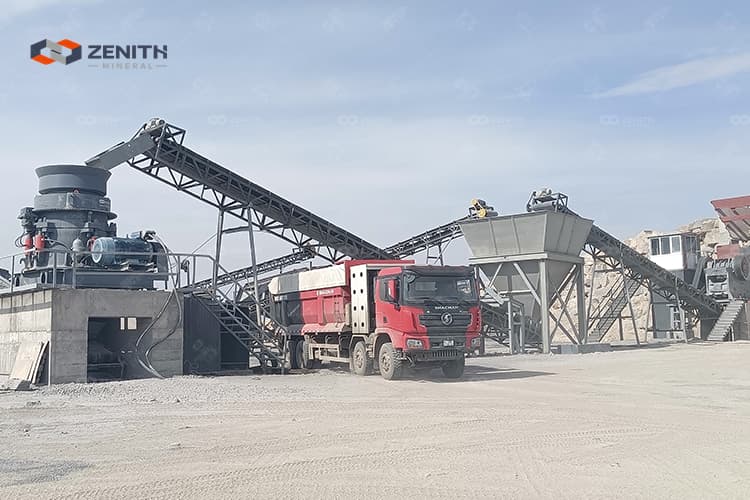
Large-scale mines / continuous production lines (capacity > 500 t/h): Closed circuit crushing process is preferred.
Although initial investment (CAPEX) and operating/maintenance costs (OPEX) are higher, the long-term benefits—such as higher capacity, stable product quality, and reduced energy and grinding media consumption in downstream grinding stages—far outweigh the upfront investment.
Small- to mid-sized mines / temporary projects / tight budgets: Open circuit crushing process is preferred.
Requires fewer units of equipment, a smaller footprint, and lower civil construction and installation costs, enabling quick commissioning and a faster return on investment (ROI).
In actual design of a crushing plant, open circuit and closed circuit is usually combined to get best operation efficiency:
Primary & Secondary Stages: Handle large feed sizes with flexible product requirements, running efficiently in an open circuit.
Tertiary / Final Stages: Assume total control over final product sizing, operating in a closed circuit to guarantee product quality.
This design delivers the optimal balance of crushing efficiency and product precision, making it the most widely adopted configuration in the industry today.
If you are planning a new crushing plant or optimizing an existing production line, partner with ZENITH. Our engineering and technical team will provide a one-to-one process diagnostic and equipment configuration recommendation tailored to your ore characteristics, capacity targets, and project budget. Contact ZENITH experts today to engineer the optimal balance between capital investment and throughput.


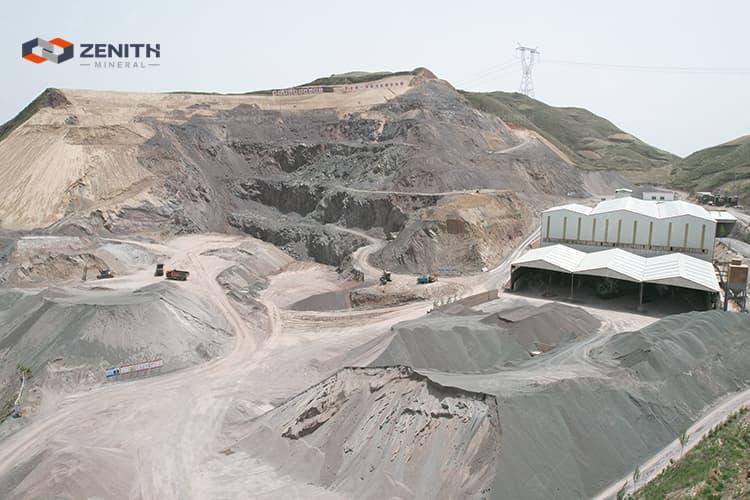
Starting a quarry business is a major undertaking that offers substantial returns but involves a complex process; this article guides you step by step, from preliminary research to the commencement of formal production.
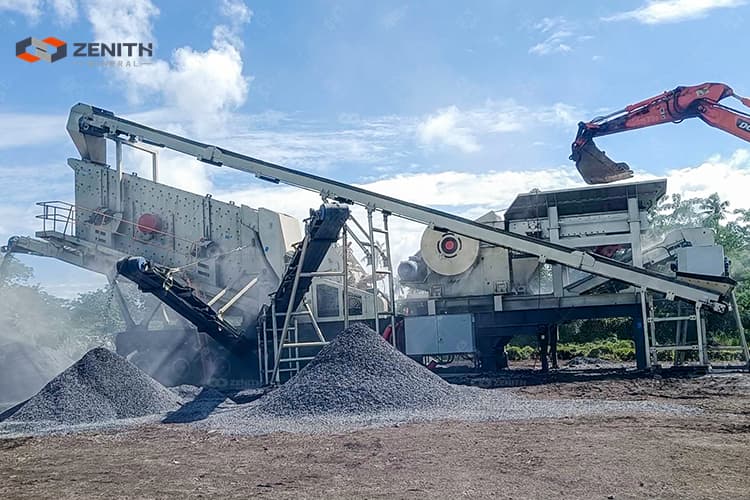
Mobile crushing plant features unmatched on-site mobility and flexible deployment capability. Here are 5 high-profit application scenarios of mobile crushing plants, and a professional 4-dimensional selection guide to help buyers pick cost-effective crushing equipment.
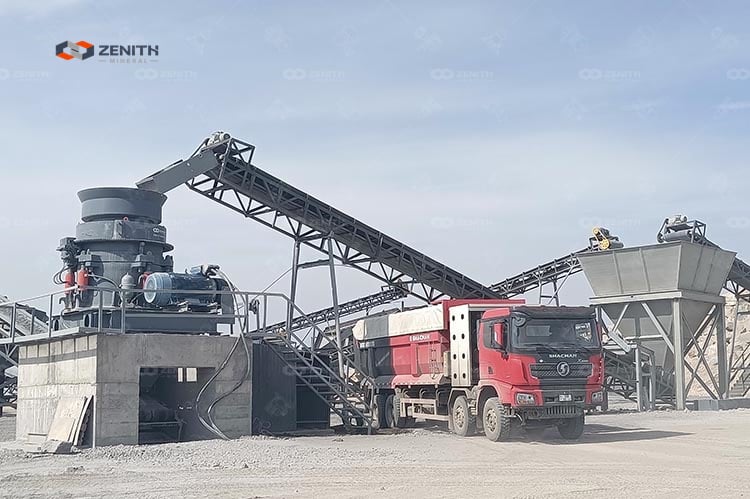
Lean how to select the proper granite coarse crusher, medium & fine crusher. When selecting granite crusher equipment and crushing solutions, it is crucial to consider not only production capacity but also wear resistance, energy efficiency, and return on investment.
Fill your requirements here, and we'll send the custmized solution and quotation to you by the reserved contact information.
Copyright ©2000-2026 SHANGHAI ZENITH MINERAL CO.,LTD.

 WhatsApp


 24/7 Online