In the mining industry, electricity costs rank as the third-largest operating expense, following labor and wear parts. Crushing, screening, and conveying—the core processes of any plant—are all power-intensive. Yet, a common but often overlooked reality is that 10% to 20% of total power consumption is simply wasted on most production lines.
This article presents a real-world energy optimization case study on an existing mining crushing plant. The client achieved significant power savings and rapid payback without purchasing new major equipment or undertaking extensive reconstruction—just four targeted optimizations.
Overview of the upgrade results:
Electricity consumption per ton of ore decreased from 21.8 kWh to 18.6 kWh, saving 3.2 kWh/ton.
Based on an annual output of 500,000 tons, annual power saving reaches 1.60 million kWh, reducing electricity costs by approximately $133,000.
Total retrofit investment: approximately $43,000
Payback period: less than 4 months
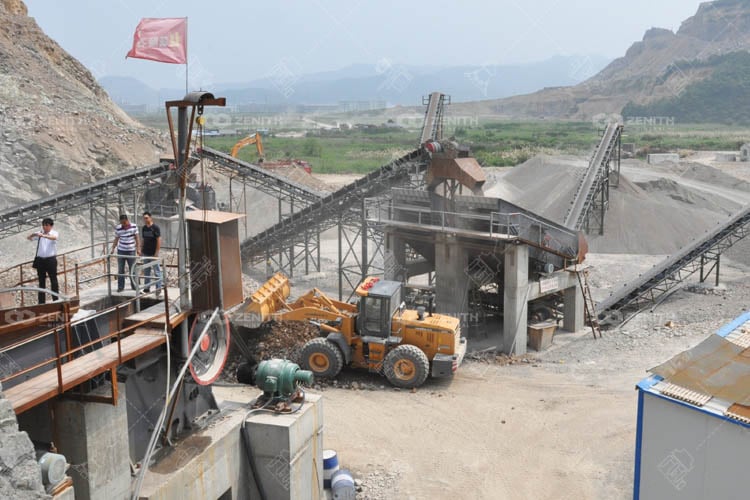
After noticing abnormally high electricity bills, the client first conducted a comprehensive energy audit. The technical team measured actual operating data for each process and piece of equipment, ultimately identifying three major waste points.
The primary jaw crusher was designed for a maximum feed size of 600 mm, but actual feed material was typically 200–300 mm. The crusher was operating in a chronic "starved" state, with motor load factor below 60%. A significant portion of electrical energy was being converted into no-load losses and wasted heat.
Startup and shutdown of different sections relied on manual coordination. When the upstream section stopped, downstream belts would continue running empty for 3–5 minutes. Total accumulated no-load runtime exceeded 2.5 hours per day.
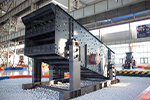
The vibrating screen was operating at only about 75% screening efficiency. This meant that for every 100 tons of material, approximately 25 tons of already-qualified product was incorrectly returned to the crusher as recirculating load. This resulted in redundant crushing, double the power consumption, and artificially high equipment load.
Measures:
Principle: Enable the crusher to operate in an efficient interparticle crushing state, where the chamber maintains sufficient material for particle-on-particle crushing, reducing direct impact on the liner and minimizing ineffective energy consumption.
Result: Primary crusher power consumption decreased by 18%, and liner wear rate also slowed significantly.
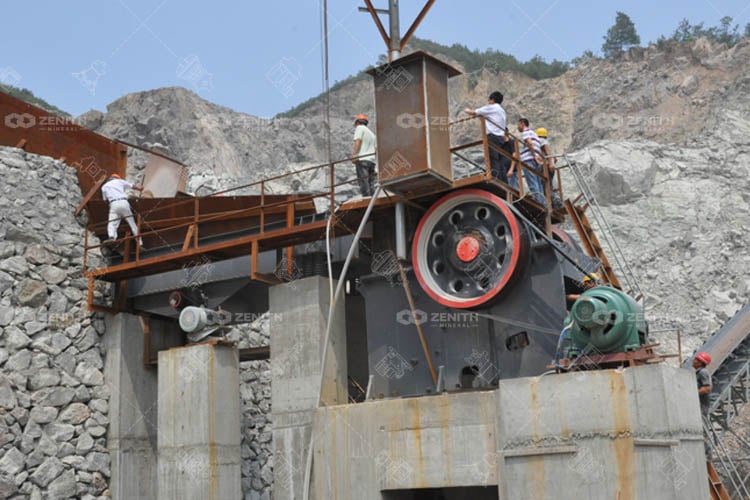
Measures: Added current monitoring sensors and interlock control modules to each belt conveyor (retrofit cost less than ~$280 USD per belt).
Logic:
Result: No-load belt operation was completely eliminated, reducing total no-load runtime by 2.5 hours per day. The electricity cost saved in a single month covered the entire retrofit investment.
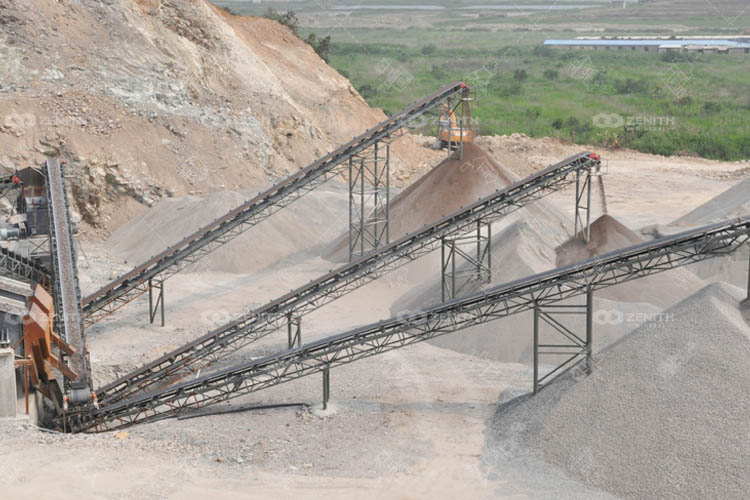
Measures:
Result: Screening efficiency increased from 75% to 92%, circulating load ratio decreased by 40%, and the downstream crusher load was significantly reduced, naturally lowering power consumption.
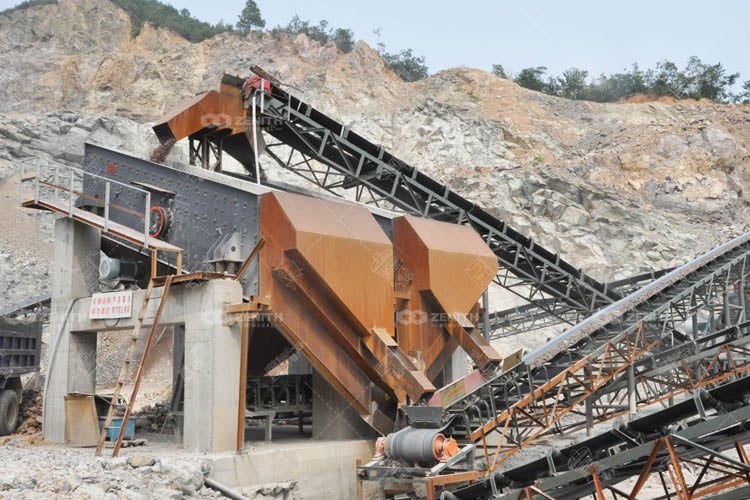
Measures: Installed independent power meters for each section and incorporated the "power consumption per ton" metric into team performance assessments. The team with the lowest monthly power consumption received a bonus incentive.
Result: Operators began proactively monitoring equipment status and reporting or adjusting abnormalities in a timely manner. Energy waste caused by human factors decreased by approximately 30%.
| Parameter | Before | After | Reduction |
|---|---|---|---|
| Power consumption per ton | 21.8 kWh/t | 18.6 kWh/t | 3.2 kWh/t |
| Annual power consumption (500,000 tpy) | 10.90 million kWh | 9.30 million kWh | 1.60 million kWh |
| Annual electricity cost (@ $0.083/kWh) | ~$908,000 | ~$775,000 | ~$133,000 |
Financial Summary:
Through energy audits and data monitoring, waste points can be identified and continuously optimized. What cannot be measured cannot be managed.
A production line operates as an integrated system. Imbalances in feed, crushing, screening, and conveying loads are the primary cause of high power consumption. Stable, balanced, and continuous operation is the most energy-efficient state.
Issues such as unstable feed, empty belt running, and inadequate screening are common across most mining production lines. While each individual optimization may seem modest, their cumulative effect over 365 days and hundreds of thousands of tons of annual production translates into substantial profit.
In an environment of fluctuating mineral prices and narrowing profit margins, cost reduction is just as critical as revenue growth. Every kilowatt-hour of electricity saved flows directly to the bottom line. Rather than complaining about high electricity bills, walk through your production line and find the hidden waste points.


Find the right crusher for your needs. Our 4-step guide helps you select the optimal jaw, cone, or impact crusher for maximum ROI and long-term value in aggregate production.
This article delves into the various aspects of stone crusher wear parts, including their importance, common types, factors affecting wear, and strategies to extend their lifespan while minimizing maintenance costs.
This article outlines some of the most frequent problems faced by stone crushers and provides effective solutions to ensure smooth operation.
Fill your requirements here, and we'll send the custmized solution and quotation to you by the reserved contact information.
Copyright ©2000-2026 SHANGHAI ZENITH MINERAL CO.,LTD.

 WhatsApp

 24/7 Online