As a professional and reliable Chinese crusher manufacturer with over 30 years of industry experience, ZENITH offers a comprehensive range of crushing equipment including jaw crushers, cone crushers, impact crushers, mobile crushing plants, and complete turnkey solutions for mining and aggregate operations worldwide. Our commitment to quality, innovation, and customer support has made us a trusted partner for projects across the globe.
With hundreds of manufacturers ranging from global giants to small local workshops, the choice can feel overwhelming. Yet the decision you make will affect your project's productivity, operating costs, and profitability for years to come.
This guide provides a clear, step-by-step approach to selecting a reliable crusher manufacturer in China. It focuses on practical considerations that directly impact your operation, helping you avoid costly mistakes.
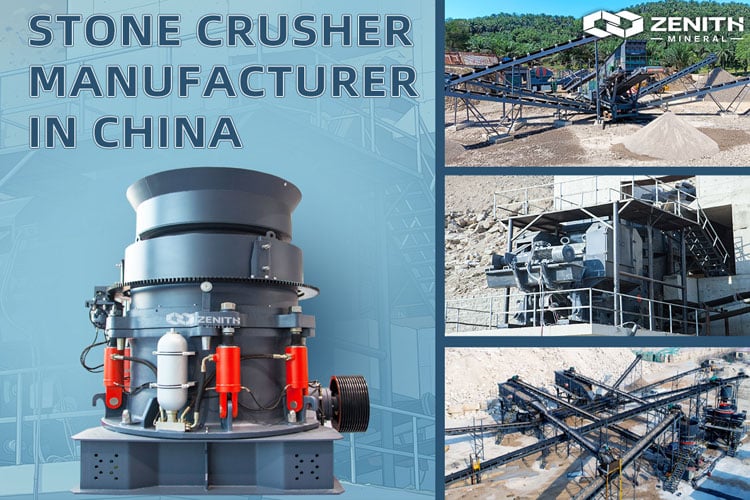
Before you contact any manufacturer, you need a clear understanding of your own needs. A manufacturer cannot propose a good solution if you cannot describe your project clearly.
Start by answering these fundamental questions:
What material will you crush? Hard granite and basalt require different crushing technology than soft limestone or recycled concrete. The material's hardness, abrasiveness, and moisture content directly influence the type of crusher you need.
What is your required capacity in tons per hour? This determines the size and number of crushers, as well as the power requirements.
What output sizes are required? Different applications demand different gradations. Road base requires coarse material, while concrete sand needs fine, well-graded particles.
Is the site fixed or mobile? If you need to move between sites, a mobile crusher is essential. For long-term operations, a stationary plant is more cost-effective.
What power source is available? Grid power is cheapest, but many African and remote sites rely on diesel generators. Some manufacturers offer hybrid solutions.
What is your budget range? Be realistic about both capital expenditure and operating costs over the plant's lifetime.
Practical Tip: Prepare a one-page project brief before you start contacting manufacturers. Include your material type, capacity target, and site conditions. This saves time and helps manufacturers give you accurate proposals.
China's crusher manufacturing industry is diverse, and the landscape has changed dramatically over the past decade. Understanding the categories helps you focus on the right type of supplier.
Global leaders with local production – Companies like Metso and Terex have established manufacturing facilities in China. They offer premium quality, advanced technology, and global service networks, but at higher prices. They are best for large-scale, high-budget projects where reliability is paramount.
Large domestic innovators – Companies like ZENITH and SBM have grown from local manufacturers into internationally recognized brands. They offer good quality, competitive pricing, and a broad product range. They are increasingly popular for mid-sized to large projects worldwide, offering a strong balance of quality and value.
Specialized niche players – Some manufacturers focus on specific product types, such as vertical shaft impact crushers for sand making or mobile crushing plants. They can be excellent choices if you need that particular technology.
Small local workshops – These offer low prices but typically lack quality control, engineering support, and after-sales service. They are generally not recommended for serious mining or commercial quarrying operations.
Recommended Approach: For most commercial projects, the "large domestic innovators" category offers the best balance of quality, price, and support. They have proven track records, international certifications, and established export experience.
Once you have a shortlist of potential manufacturers, evaluate their technical capability thoroughly. This is where many buyers make mistakes.
Check design and engineering standards. Does the manufacturer use modern CAD and simulation tools? Do they test their designs before production? A manufacturer that invests in engineering is more likely to produce reliable equipment.
Examine material quality. Crushers face extreme forces and abrasion. The quality of steel used in the frame, shafts, and wear parts directly determines service life. Ask about the grades of steel and wear-resistant materials they use.
Look at manufacturing processes. Visit the factory if possible, or request a virtual tour. Look for clean, organized production lines, modern machining equipment, and quality control checkpoints. A messy factory often indicates poor quality control.
Verify certifications. Reputable manufacturers hold ISO 9001 (quality management), CE (European safety), and sometimes SGS or other international certifications. These are not guarantees, but they indicate a commitment to standards.
Ask about key components. Where do they source bearings, motors, and hydraulic systems? Reputable manufacturers use internationally recognized brands like SKF, FAG, Siemens, or ABB. The use of cheap, unknown brands is a red flag.
Request performance data. Ask for specific data on throughput, power consumption, wear part life, and product shape for materials similar to yours. A manufacturer that cannot provide this data may lack experience.
A manufacturer that offers a complete range of equipment is often a better partner than one that only makes a single machine.
Look for a complete product line. Does the manufacturer offer jaw crushers, cone crushers, impact crushers, vibrating screens, feeders, and conveyors? Sourcing everything from one supplier simplifies procurement, commissioning, and after-sales support. It also ensures compatibility between components.
Evaluate customization ability. No two quarry sites are identical. Can the manufacturer design a plant layout tailored to your specific site conditions? Can they adjust equipment specifications for your specific material? Customization capability is particularly important for complex or challenging projects.
Consider turnkey capabilities. Some manufacturers offer complete plant design, supply, installation, and commissioning services. This can significantly reduce your project management burden, especially if you lack local engineering expertise.
Check for modular options. For faster installation and future expansion, modular plant designs are increasingly popular. Ask if the manufacturer offers pre-engineered modular solutions.
This is often the most overlooked factor, yet it has the greatest impact on long-term operating costs and uptime.
Verify local representation. Does the manufacturer have a local distributor, agent, or office in your region? Local presence means faster response times, easier communication, and better understanding of local conditions.
Check spare parts availability. Ask about their spare parts policy. Are critical parts stocked locally, or do they always need to be shipped from China? What is the typical lead time for common wear parts like jaw plates, blow bars, and liners? A manufacturer that cannot guarantee parts availability within days (not weeks) should be avoided.
Evaluate warranty terms. What does the warranty cover, and for how long? Understand what is included and what is excluded. Get the warranty in writing.
Assess service response. Ask about service response times. Do they have technicians that can travel to your site? What is the process for getting technical support? Test their responsiveness by sending a technical question and measuring how quickly and thoroughly they respond.
Ask about training. Do they provide operator and maintenance training? Well-trained staff significantly reduce downtime and equipment damage.
A manufacturer's track record with projects similar to yours is one of the best indicators of future performance.
Ask for references. Request a list of customers in your region or industry, preferably with projects of similar scale and material type. Contact those references to ask about their experience—equipment reliability, support responsiveness, parts availability, and overall satisfaction.
Visit operating sites. If possible, visit a site where the manufacturer's equipment is operating. Seeing the equipment in action and talking to the operators gives you real-world insights that no brochure can provide.
Check online reviews. Search for reviews on industry forums, social media, and third-party review sites. Look for patterns—repeated complaints about specific issues.
Verify export experience. For international buyers, export experience matters. Ask about their export documentation, container loading procedures, and experience with shipping to your country. Customs clearance issues can cause expensive delays.
Throughout the evaluation process, pay attention to how the manufacturer communicates. This is a strong indicator of what your future working relationship will be like.
Assess responsiveness. Do they reply to your emails or messages promptly? Are they clear and thorough in their answers? Slow or vague communication during the sales process often worsens after the purchase.
Check technical knowledge. Do their sales engineers understand your application and material? Can they explain technical details clearly? A manufacturer that cannot demonstrate solid technical knowledge is unlikely to provide good support later.
Evaluate transparency. Are they upfront about costs, lead times, and potential challenges? Or do they promise unrealistic performance and delivery dates? Trustworthy manufacturers are honest about what they can and cannot do.
Consider language and cultural factors. For international buyers, language differences can cause misunderstandings. Look for manufacturers with fluent English-speaking staff and experience working with international clients.
Once you have gathered information from multiple manufacturers, compare them systematically.
Look beyond the price. The lowest price is rarely the best deal in the long run. Consider the total cost of ownership, including maintenance, spare parts, energy consumption, and downtime costs over the equipment's lifetime.
Compare specifications side by side. Put the technical specifications, capacity claims, and features of each proposal into a simple comparison table. Look for significant differences or unrealistic claims.
Ask for clarification. If you see major differences in price or specifications, ask the manufacturer to explain why. Sometimes there is a valid reason; other times it reveals a weakness.
Trust your judgment. After all the analysis, consider how comfortable you feel with each manufacturer. Did they seem trustworthy and competent? Did you communicate well? Your intuition matters.
Choosing a crusher manufacturer in China is a significant decision that requires careful evaluation. By following this systematic approach, you can minimize risks and select a partner that will deliver reliable equipment, responsive support, and long-term value.
Key Takeaways for a Successful Selection:
Founded in 1987, ZENITH has evolved beyond a traditional equipment supplier into a premier global provider of complete, automated mineral and aggregate processing systems. The company differentiates itself through several core pillars:
By blending high-tier manufacturing precision with an international after-sales infrastructure, ZENITH provides a reliable, high-yield pathway for modern mining and quarry procurement.


Looking for the top 10 crusher manufacturers in China? Compare SBM, ZENITH, Metso China, and 7 other leading suppliers. See key products, market strengths, and tech innovations in one list.
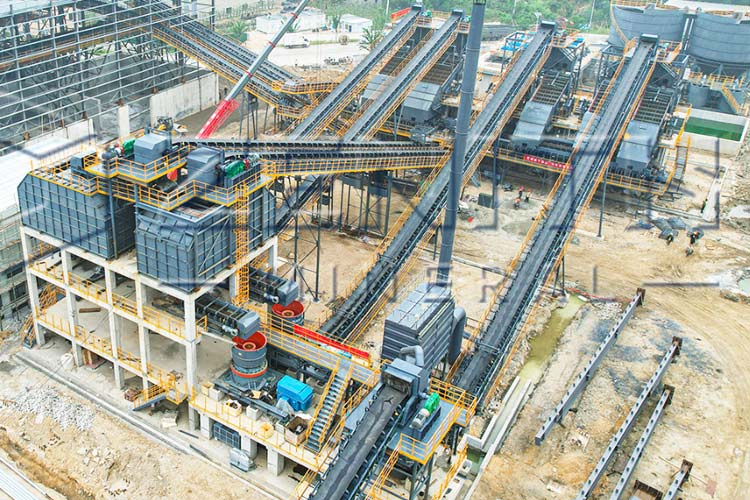
Stone crushers are machines designed to reduce large rocks into smaller rocks, gravel, or rock dust. They are commonly used in the mining, construction, and recycling industries.
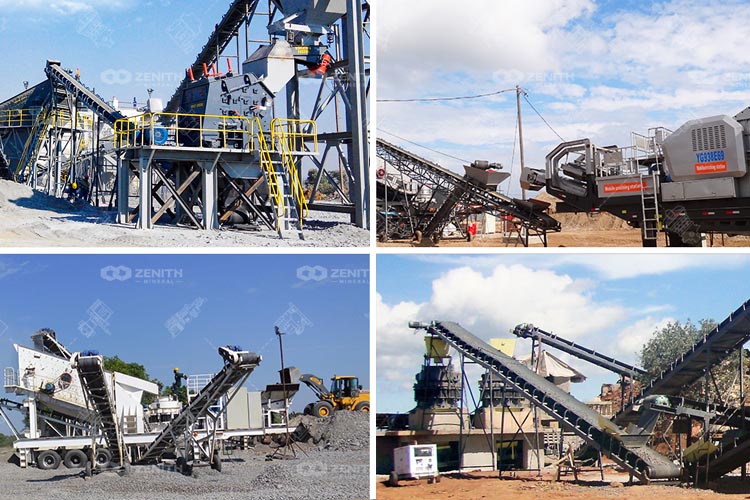
The price of stone crusher machines can vary significantly between countries due to factors like local manufacturing, taxes, transportation costs and currency fluctuations.
Fill your requirements here, and we'll send the custmized solution and quotation to you by the reserved contact information.
Copyright ©2000-2026 SHANGHAI ZENITH MINERAL CO.,LTD.

 WhatsApp

 24/7 Online