
 WhatsApp
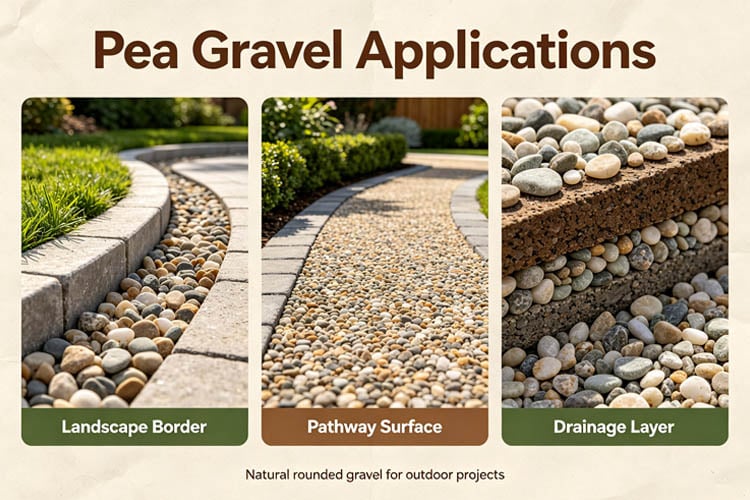
Pea gravel is one of the most versatile and widely used landscaping materials in North America. Its smooth, rounded stones—typically about the size of a green pea—offer a unique combination of aesthetic appeal, functionality, and affordability that makes it a top choice for pathways, playgrounds, drainage systems, and decorative ground cover.
But pea gravel is not perfect for every application. Understanding its pros and cons is essential to determine whether it is the right material for your specific project.
This guide provides a comprehensive, balanced assessment of pea gravel. We cover its advantages, disadvantages, best applications, cost considerations, and maintenance requirements—giving you the information you need to make an informed decision.
Part I: What Is Pea Gravel?
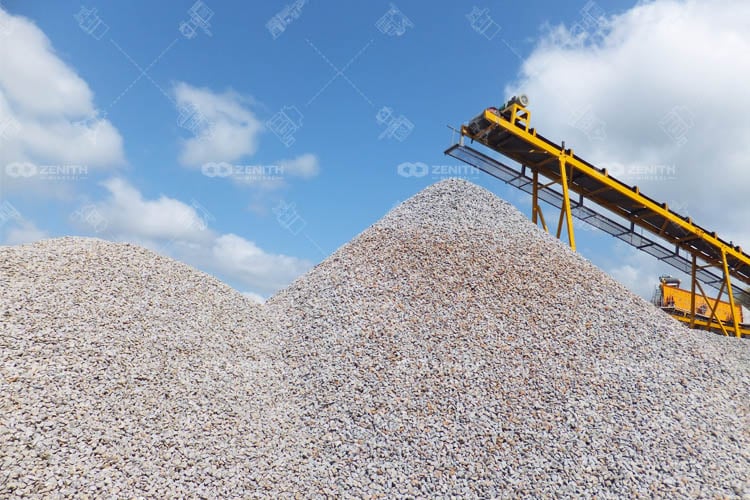
Pea gravel is a naturally occurring aggregate formed by thousands of years of water erosion. It is typically harvested from riverbeds, glacial deposits, and ancient watercourses. The stones are small, smooth, and rounded, ranging in size from 1/8 inch to 3/8 inch (approximately 3 to 10 millimeters).
Key Physical Characteristics
| Feature | Description |
|---|---|
| Size | 1/8" to 3/8" (3–10 mm) |
| Shape | Smooth, rounded, polished |
| Color range | Natural earth tones: brown, gray, white, tan, and mixed |
| Texture | Comfortable underfoot |
| Compaction | Does not compact; remains loose |
| Drainage | Excellent—water flows freely through gaps |
Note: Pea gravel is named for its size and shape, not its color. The stones resemble green peas in form, not in hue.
Part II: The Pros of Pea Gravel
Pea Gravel is highly affordable, incredibly DIY-friendly to install, provides excellent surface water drainage, and is the safest aggregate for bare feet and dog paws.
1. Aesthetic Versatility
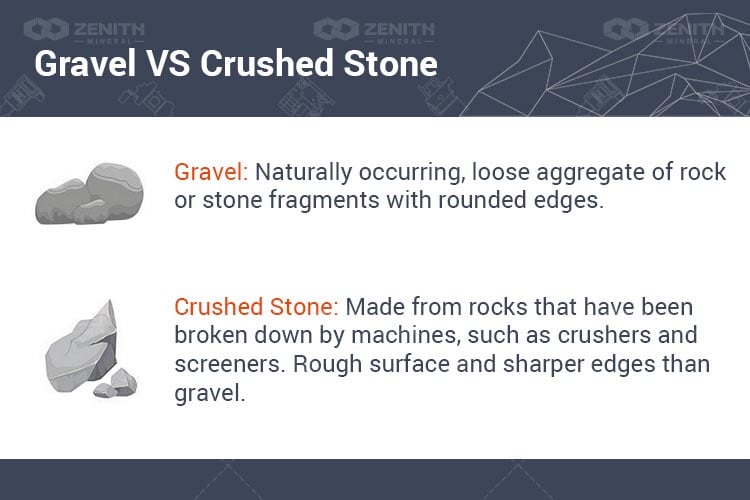
Pea gravel offers a natural, timeless appearance that complements almost any landscape design. Its rounded stones create a softer, more organic look than angular crushed stone.
- Available in a variety of natural colors
- Blends seamlessly with plants, flowers, and hardscaping
- Suitable for both modern and traditional designs
- Does not fade or degrade like wood mulch
Best for: Garden pathways, decorative borders, and rock gardens where appearance matters.
2. Comfort Underfoot
The smooth, rounded shape of pea gravel makes it exceptionally comfortable to walk on—even barefoot. This is a significant advantage over sharp-edged materials like crushed stone.
- Pleasant "crunch" sound when walking
- Safe for children and pets
- Ideal for recreational areas
Best for: Playgrounds, dog runs, and pathways where comfort is a priority.
3. Excellent Drainage
Pea gravel drains water exceptionally well. The rounded stones create large void spaces between them, allowing water to flow through freely.
- Prevents puddles and mud formation
- Reduces erosion on sloped surfaces
- Ideal for areas with heavy rainfall
Best for: French drains, drainage swales, and areas prone to standing water.
4. Low Maintenance (When Properly Installed)
Once installed, pea gravel requires minimal maintenance compared to lawns, wood mulch, or other ground covers.
- No mowing, watering, or fertilizing
- Does not decompose or rot
- Does not attract termites or pests
- Easily refreshed by adding a new top layer
Best for: Low-maintenance landscaping and commercial properties.
5. Cost-Effective
Pea gravel is generally affordable compared to other hardscaping materials. It is less expensive than pavers, concrete, or natural stone.
| Material | Typical Cost (per ton) |
|---|---|
| Pea gravel | $40–$70 |
| Crushed stone | $30–$60 |
| River rock | $60–$100+ |
| Pavers | $150–$300+ (installed) |
Best for: Budget-conscious projects requiring large coverage.
6. Easy Installation
Pea gravel is one of the easiest hardscaping materials to install. It does not require specialized tools or skills.
- Simply excavate, lay landscape fabric, and pour the gravel
- No curing time required
- Can be installed in stages
Best for: DIY projects and quick installations.
Part III: The Cons of Pea Gravel
Because the stones are perfectly round, pea gravel act like tiny ball bearings and will not compact. Without proper rigid edging and stabilizing grids, pea gravel will shift constantly, sink under heavy patio furniture, and scatter into surrounding lawns. It is also notoriously difficult to clear of autumn leaves or winter snow.
1. Poor Stability (Shifting Under Load)
Pea gravel does not compact. The smooth, rounded stones act like tiny ball bearings, sliding past each other under pressure.
- Shifts under vehicle weight—not suitable for driveways
- Uneven surface for heavy foot traffic
- Tires can sink and create ruts
Not recommended for: Driveways, parking areas, or heavy-equipment zones.
2. Displacement and Scattering
Pea gravel is easily displaced by foot traffic, tires, wind, and water.
- Stones can scatter onto adjacent surfaces (lawns, patios)
- Requires rigid edging to contain the material
- Regular raking may be needed to redistribute displaced stones
Mitigation: Use steel, stone, or heavy plastic edging to create a solid border.
3. Weed Growth (Without Fabric)
Pea gravel alone does not prevent weeds. Without a proper barrier, weeds and grass will grow through the stones.
- Requires landscape fabric or geotextile underlayment
- Weed seeds can blow in from above
- Periodic spot treatment may be necessary
Mitigation: Always install heavy-duty landscape fabric before pouring pea gravel.
4. Not Suitable for Slopes
Pea gravel is not recommended for steep slopes or embankments. The stones will slide downhill over time.
- Heavy rain can wash stones away
- Requires stabilization grids on slopes
- River rock is a better choice for erosion control
Better alternative: Use river rock (larger, heavier stones) for slopes and erosion-prone areas.
5. Periodic Top-Up Required
While pea gravel is low maintenance, it will eventually need to be topped up. Stones can be lost to displacement, erosion, or compaction.
- 10-20% loss over 3-5 years is common
- Topping up restores appearance and coverage
- Additional cost over time
Mitigation: Install the recommended depth (2–3 inches for foot traffic) to extend the need for top-up.
6. Difficulty in Snow and Ice
Pea gravel can be difficult to manage in winter conditions.
- Hard to shovel or plow (stones stick to snow)
- Stones can be mixed with snow and spread onto lawns
- De-icing salts can alter the color of stones
Mitigation: Avoid using pea gravel in areas that require frequent snow removal.
Part IV: Pea Gravel vs. Alternatives
| Material | Best For | Why |
|---|---|---|
| Pea Gravel | Pathways, playgrounds, drainage | Comfortable, drains well, natural look |
| Crushed Stone | Driveways, bases, load-bearing areas | Compacts, locks together, stable |
| River Rock | Decorative borders, erosion control | Large, heavy, stays in place |
| Wood Mulch | Garden beds, plant-based landscaping | Improves soil, decomposes |
| Pavers/Concrete | Patios, walkways, high-traffic areas | Permanent, stable, low maintenance |
Part V: Cost and Installation Guide
Installation Depth Recommendations
| Application | Recommended Depth |
|---|---|
| Walkways and pathways | 2–3 inches |
| Playgrounds | 4–6 inches |
| Decorative ground cover | 1–2 inches |
| Drainage applications | Varies by design |
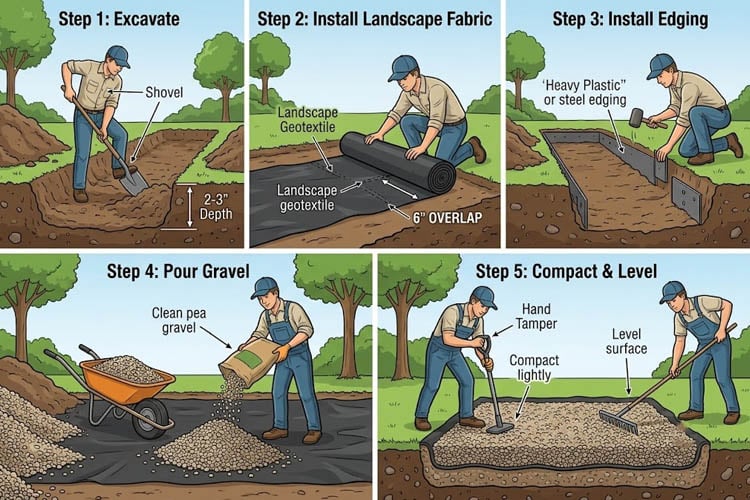
Step-by-Step Installation
- 1. Excavate the area to the required depth.
- 2. Install landscape fabric (heavy-duty geotextile) to prevent weeds. Overlap seams by 6 inches.
- 3. Install edging (steel, plastic, or stone) to contain the gravel.
- 4. Pour pea gravel and rake to an even surface.
- 5. Compact lightly (if needed) and check drainage.
Cost Considerations
| Cost Factor | Typical Range |
|---|---|
| Material cost (per ton) | $40–$70 |
| Delivery fee | $50–$150 per load |
| Labor (if hiring) | $50–$100 per hour |
| Landscape fabric | $0.50–$1.50 per square foot |
| Edging materials | $1–$5 per linear foot |
Part VI: Frequently Asked Questions
Q1: Is pea gravel good for a driveway?
A: No. Pea gravel is not recommended for driveways because it shifts under vehicle weight and does not compact. Use crushed stone (crusher run) for driveways.
Q2: Does pea gravel drain well?
A: Yes. Pea gravel has excellent drainage because the rounded stones create large void spaces that allow water to flow freely.
Q3: Does pea gravel attract weeds?
A: Pea gravel itself does not attract weeds, but weeds can grow through it without a proper barrier. Always install landscape fabric beneath the gravel to prevent weed growth.
Q4: Is pea gravel safe for dogs?
A: Yes. Pea gravel is smooth and comfortable on dogs' paw pads, making it a popular choice for dog runs and pet areas. Unlike crushed stone, it does not cut or irritate paws.
Q5: How long does pea gravel last?
A: Pea gravel is a permanent material. With proper installation and occasional top-ups (every 3-5 years), it can last indefinitely. It does not decompose or degrade.
Q6: Can I lay pea gravel directly on soil?
A: It is not recommended. Without landscape fabric or a compacted base, the gravel will mix with the soil and sink over time. Install landscape fabric and a compacted base for best results.
Q7: Is pea gravel cheaper than crushed stone?
A: Pea gravel is typically slightly more expensive than crushed stone ($40–70 per ton vs. $30–60 per ton) because it requires more processing and sourcing from natural deposits.
Is Pea Gravel Right for Your Project?
To maximize your investment and avoid frustration, restrict your use of pea gravel to the applications where its unique properties shine.
✅ Best Uses for Pea Gravel:
- Playground surfaces (excellent shock absorption)
- Dog potty areas and kennels
- Decorative garden borders and flower bed mulch-alternatives
- Low-traffic walkways and fire pit seating areas
❌ Worst Uses for Pea Gravel:
- Driveways: Car tires will sink instantly, creating deep ruts and shooting stones everywhere. (Use a dense-graded crushed stone like #411 instead).
- Steep Slopes: The smooth stones will act like an avalanche and wash away during the first heavy rainstorm.
- Primary Dining Patios: Unless you lay stepping stones or pavers within the gravel, your chairs and tables will not sit level.
Need Professional Advice on Your Pea Gravel Project?
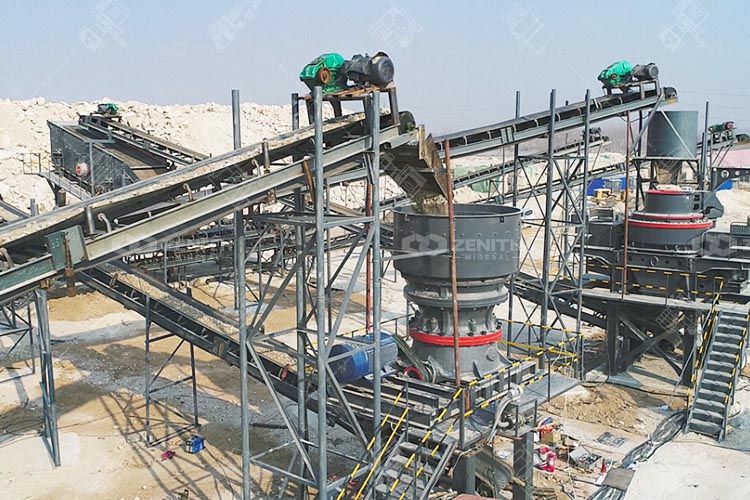
At ZENITH, we supply equipment for producing high-quality aggregates, including pea gravel, crushed stone, and manufactured sand. Whether you are a quarry operator, contractor, or project manager, our team can help you understand the materials that best suit your application.




 24/7 Online