Selecting and purchasing crushing equipment for mining, quarrying, or construction projects in Africa involves far more than just looking at a factory price tag. Procurement teams must account for raw material hardness, required output capacity, international ocean freight, inland transport, and destination import tariffs.
Across African markets, the total investment for a aggregate or mining crusher typically ranges from $30,000 for small standalone units to over $1,500,000 for complete multi-stage production lines. Portable and tracked mobile crushing plants generally range between $80,000 and $600,000+ depending on drive type and capacity.
This comprehensive guide breaks down the core determinants of crusher costs across Africa and provides detailed market profiles and price expectations for 10 key African markets.

Understanding why equipment quotes vary significantly requires evaluating four critical operational dimensions:
Primary Applications: Gold mining, granite quarrying, road construction.
Ghana is one of West Africa's primary gold producers and infrastructure hubs. With direct port access via Tema and Takoradi, logistics are straightforward. Demand is heavily concentrated on 100–300 TPH cone crushing plants for hard-rock gold ore processing and high-efficiency jaw-impact combinations for commercial aggregate production.
Estimated Delivered Cost Range: $80,000 – $500,000+
Primary Applications: Commercial granite aggregate, highway construction, urban infrastructure.
Nigeria represents one of Africa's largest aggregate markets. High demand for construction aggregates makes 150–500 TPH stationary and semi-mobile plants popular. Deliveries through Lagos (Apapa/Tin Can ports) or Port Harcourt require factoring in local clearing dynamics and inland haulage fees.
Estimated Delivered Cost Range: $100,000 – $650,000+
Primary Applications: Road building, railway ballast, commercial aggregate production.
As the primary trade gateway for East Africa via the Port of Mombasa, Kenya benefits from streamlined logistics. Local operators frequently source 100–250 TPH jaw and cone crushing combinations to process hard granite and basalt for ongoing infrastructure projects.
Estimated Delivered Cost Range: $70,000 – $400,000+
Primary Applications: Gold mining, aggregate quarrying, infrastructure expansion.
With major port access at Dar es Salaam, Tanzania serves both domestic mining projects and transit corridors to central Africa. Demand favors heavy-duty primary jaw crushers and multi-stage cone crushing circuits designed for continuous heavy-tonnage operation.
Estimated Delivered Cost Range: $90,000 – $550,000+
Primary Applications: Urban construction, road development, limestone quarrying.
As a landlocked nation, Uganda relies on transit haulage from Mombasa (Kenya) or Dar es Salaam (Tanzania). Trans-border logistics add approximately 15% to 25% in freight costs. Consequently, highly portable, modular crushing units (50–200 TPH) that require zero concrete foundations are highly preferred to offset total deployment costs.
Estimated Delivered Cost Range: $75,000 – $380,000+
Primary Applications: Heavy mining (platinum, iron ore, coal), commercial aggregate.
South Africa features one of the continent's most mature mining and quarrying sectors. Equipment standards are exceptionally stringent, requiring high automation, robust safety interlocks, and strict environmental compliance. Tracked mobile crushers and high-capacity cone crushers dominate this market.
Estimated Delivered Cost Range: $120,000 – $900,000+
Primary Applications: Lithium mining, chrome extraction, gold processing, aggregate quarrying.
Zimbabwe's rapid expansion in green energy minerals (specifically lithium) and hard-rock mining has created surge demand for high-capacity primary jaw crushers and fine cone crushers (150–400 TPH). Equipment is typically shipped via the Port of Beira (Mozambique) or Durban (South Africa) followed by overland haulage.
Estimated Delivered Cost Range: $110,000 – $750,000+
Primary Applications: Copper mining, overburden processing, infrastructure aggregates.
As a major global copper producer, Zambia demands heavy-duty crushing equipment capable of handling highly abrasive copper ores. Landlocked logistics through regional transit corridors make semi-mobile skid-mounted plants popular due to their easy erection and minimal civil work requirements.
Estimated Delivered Cost Range: $100,000 – $700,000+
Primary Applications: Diamond mining support, stone quarrying, civil engineering.
Botswana's mining ecosystem prioritizes low operational downtime, high safety standards, and energy efficiency. Buyers lean toward premium-engineered jaw and cone units backed by comprehensive regional technical service and rapid spare-part availability.
Estimated Delivered Cost Range: $95,000 – $600,000+
Primary Applications: Federal infrastructure, dam construction, industrial stone quarrying.
Ethiopia's large-scale civil engineering works require reliable 150–300 TPH crushing lines. Shipments land primarily at Djibouti Port before transit overland. Operators favor modular designs that simplify border clearance and speed up site setup.
Estimated Delivered Cost Range: $85,000 – $480,000+
| Country | Dominant Application | Typical Capacity (TPH) | Estimated Cost Range (USD) | Logistics Profile |
|---|---|---|---|---|
| Ghana | Gold Mining & Aggregates | 100 – 300 TPH | $80,000 – $500,000+ | Direct seaport landing (Tema/Takoradi) |
| Nigeria | Granite & Commercial Aggregate | 150 – 500 TPH | $100,000 – $650,000+ | Direct seaport landing (Lagos/PH) |
| Kenya | Roads & Railway Ballast | 100 – 250 TPH | $70,000 – $400,000+ | Direct seaport landing (Mombasa) |
| Tanzania | Mining & Quarrying | 100 – 400 TPH | $90,000 – $550,000+ | Direct seaport landing (Dar es Salaam) |
| Uganda | Infrastructure & Aggregates | 50 – 200 TPH | $75,000 – $380,000+ | Landlocked (Overland via Mombasa/Dar) |
| South Africa | Heavy Mining & Quarries | 150 – 600+ TPH | $120,000 – $900,000+ | Direct seaport landing (Durban/Cape Town) |
| Zimbabwe | Lithium, Gold & Chrome Mining | 150 – 400 TPH | $110,000 – $750,000+ | Landlocked (Overland via Beira/Durban) |
| Zambia | Copper Mining & Aggregates | 100 – 400 TPH | $100,000 – $700,000+ | Landlocked (Overland via Durban/Dar) |
| Botswana | Diamond Mining & Quarries | 100 – 300 TPH | $95,000 – $600,000+ | Landlocked (Overland via South Africa) |
| Ethiopia | Infrastructure & Civil Works | 150 – 300 TPH | $85,000 – $480,000+ | Landlocked (Overland via Djibouti Port) |
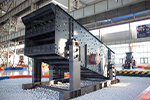
For a small-scale aggregate quarry (50–100 TPH), a primary jaw crusher paired with a single-deck or double-deck vibrating screen is the most economical setup. If mobility is required, a wheel-mounted portable jaw crushing unit provides fast installation with minimal foundation costs.
As a rule of thumb, add 15% to 35% on top of the FOB equipment price to cover ocean freight, maritime insurance, customs duties, port handling fees, and inland transit. Landlocked destinations will fall on the higher end of this scale.
Mobile crushers are superior for short-to-medium-term contracts, urban C&D recycling, or remote projects where civil engineering materials (like ready-mix concrete) are unavailable or expensive. Stationary or semi-mobile plants remain more cost-effective for permanent quarries with lifespans exceeding 5–10 years and continuous high-tonnage targets.
Navigating crusher prices in African countries requires balancing equipment purchase costs against long-term operational durability and regional logistical realities. Whether operating in coastal markets like Ghana and Nigeria or landlocked mining zones in Zimbabwe and Zambia, selecting the right process design is vital for maximizing ROI.
Whether you require an agile Tracked Mobile Crusher, a modular NK Portable Plant, or a heavy-duty MK Semi-Mobile Setup, ZENITH's experienced African regional team is ready to deliver tailored flowsheet designs and factory-direct pricing.
Contact our engineering specialists today to receive a free, customized quotation and project configuration designed specifically for your local operating environment.


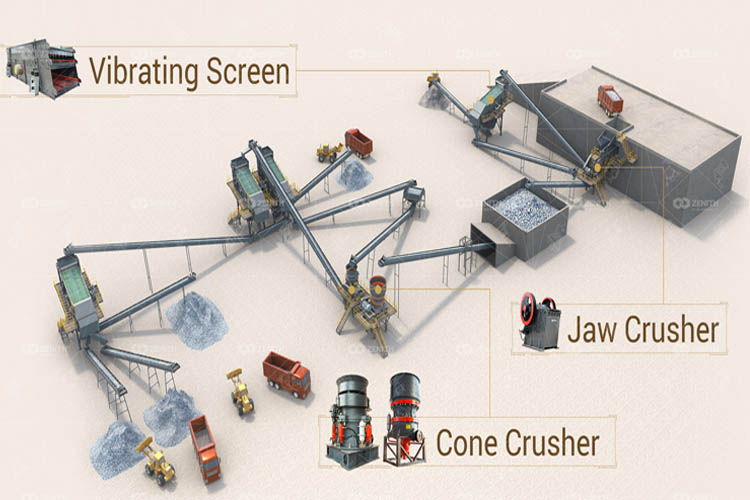
A comprehensive engineering guide on designing a high-efficiency, energy-saving granite crushing plant in Africa. Learn about multi-stage crushing configurations for hard rock quarries.
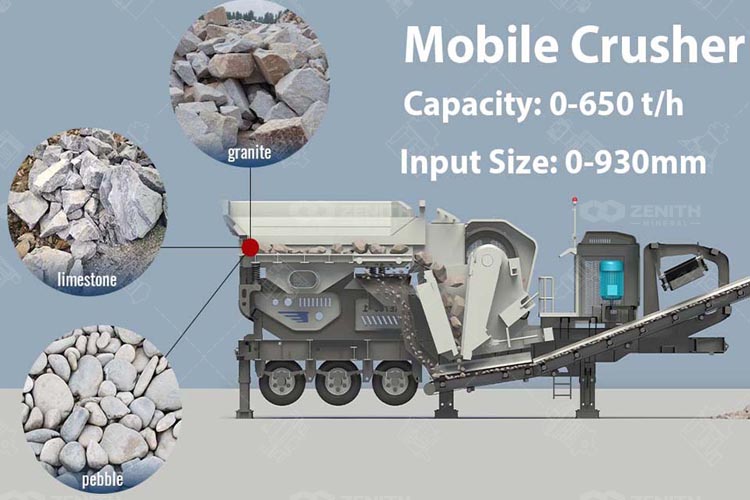
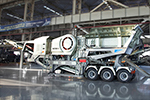
The mobile crusher is very popular in South Africa, Which has helped our customers create great value, so what's the magic of this equipment?
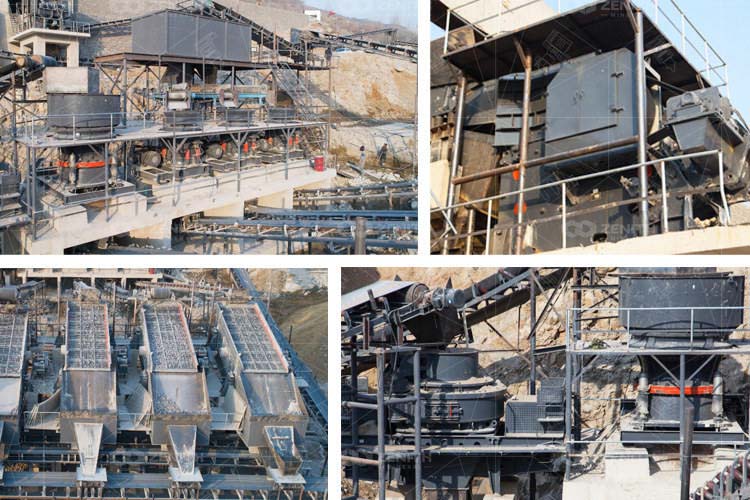
Stone crusher can be widely found in South Africa mining site, it is the basic machine for mineral processing line. Zenith will provide you with crushers of different styles and sizes at the best price according to your requirements.
Fill your requirements here, and we'll send the custmized solution and quotation to you by the reserved contact information.
Copyright ©2000-2026 SHANGHAI ZENITH MINERAL CO.,LTD.

 WhatsApp

 24/7 Online